Choosing a sinus lift provider requires more than finding the closest dental clinic: the surgeon must match the technique to your three-dimensional sinus anatomy, identify disease that needs treatment first, and explain whether your implant will be placed immediately or later. By the end, you will have a practical checklist for comparing a sinus lift surgeon, asking for a complete quotation, and booking care in Borivali or elsewhere in Mumbai.
Key takeaways
- Request a 3D CBCT scan before choosing a sinus lift technique.
- Disclose sinus infections, allergies, smoking and all current medicines.
- Ask whether implants are placed during augmentation or after healing.
- Compare surgical experience, emergency access, imaging and written aftercare.
How the maxillary sinus affects an upper-jaw implant plan
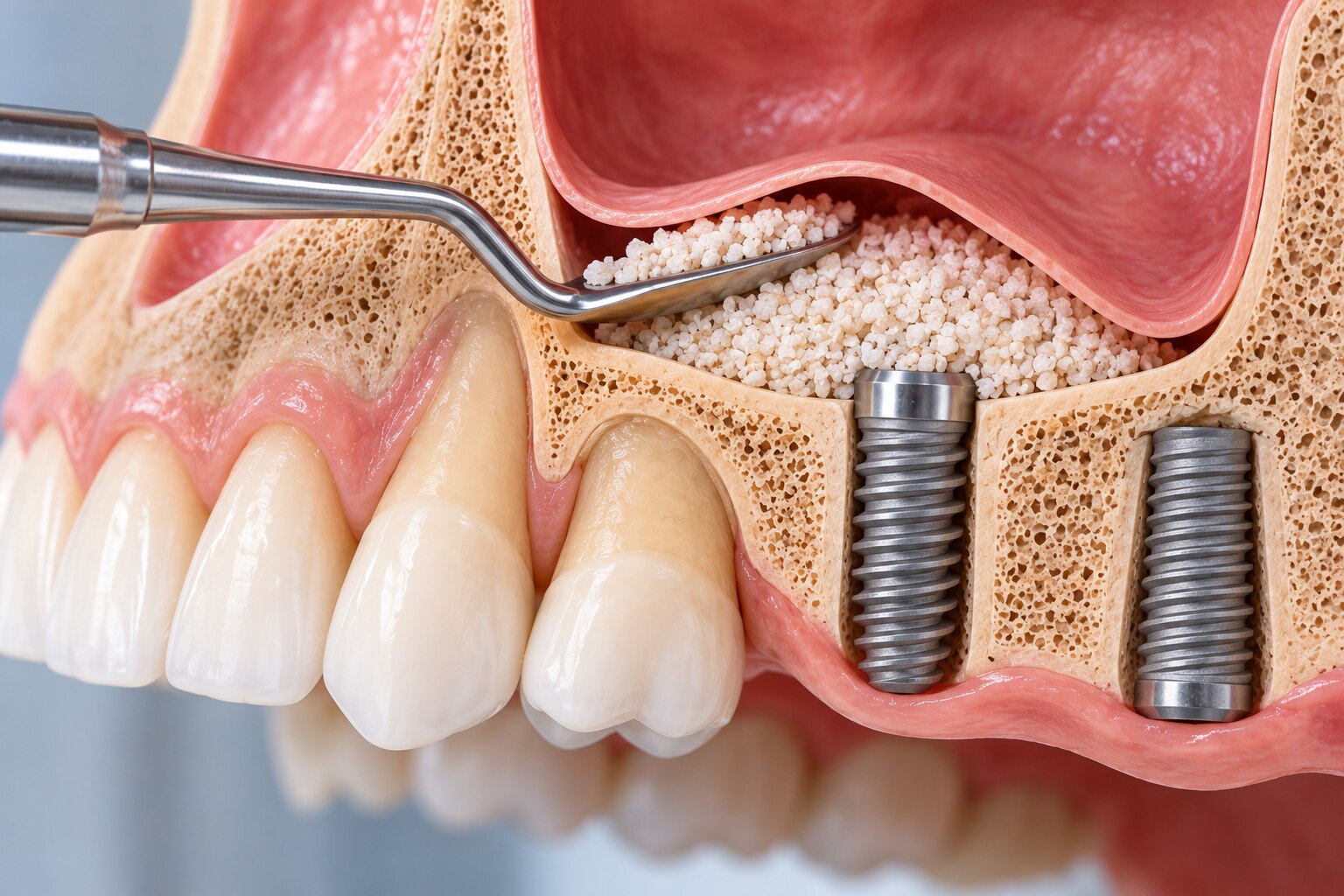
The maxillary sinus is an air-filled space above the roots of the upper premolars and molars because the posterior maxilla sits beneath the sinus floor. After extraction, the surrounding ridge can shrink, while the sinus can expand downward into the space left by the roots.
Together, these changes reduce the vertical bone available for an implant.
A sinus lift is not automatic for every upper-molar implant. A shorter implant, a different implant position, or existing bone along the sinus floor may provide adequate support without augmentation. The decision depends on three-dimensional anatomy, not on the tooth label alone.
Before you search for sinus lift surgery near Borivali Mumbai, ask how the plan accounts for:
- The proposed implant length, diameter and exact position.
- Residual bone height between the ridge and sinus floor.
- Sinus-floor shape, septa, wall thickness and nearby structures.
- Whether the implant can achieve primary stability without grafting.
- The planned approach if augmentation is needed: transcrestal access through the implant site or a lateral window in the cheek-side wall.
A panoramic X-ray gives an overview, but cone-beam CT measures the site in three dimensions and can reveal anatomy that changes the plan. The sinus lift and final crown are separate stages: even simultaneous implant placement requires healing, integration and later crown fabrication. Booking surgery does not mean booking a completed tooth.
Which sinus lift technique and tests should a surgeon offer?
A surgeon chooses the approach from residual bone height, the lift required, implant stability, and the number and position of implants—not from a clinic’s preferred method.
| Approach | Route | Typical planning use |
|---|---|---|
| Transcrestal (osteotome) | Through the implant osteotomy | Smaller vertical lifts when existing bone can provide primary implant stability |
| Lateral-window | Through an opening in the side wall of the maxilla | Greater augmentation, very limited bone, multiple implants, or implants spread across difficult positions |
These are planning guidelines, not fixed cutoffs. Very little residual bone can lead to a staged lift followed by implant placement; enough native bone can permit simultaneous placement. The planned implant trajectory and the sinus-floor shape decide whether either route is safe.
Before booking a sinus lift surgeon Borivali, expect these checks:
- Clinical examination of the missing-tooth area, bite, soft tissues and any oral-antral opening
- Gum-health assessment, including inflammation, pockets and active dental infection
- Panoramic radiograph for an initial view of teeth, bone and sinus position
- CBCT reviewed in three dimensions for residual bone height, sinus-floor anatomy, septa, arterial canals, wall thickening, opacification and the planned implant trajectory
A panoramic image cannot show the site in all three dimensions. If symptoms or CBCT findings suggest sinusitis, blocked drainage, a cyst or significant disease, obtain medical or ENT assessment before augmentation; booking surgery first can cause avoidable postponement.
What must be treated or disclosed before augmentation?
Active sinus disease or an abnormal mouth-to-sinus opening must be treated or medically assessed before augmentation. CBCT or symptoms showing chronic sinusitis, nasal obstruction, blocked sinus drainage, polyps, cysts, significant Schneiderian membrane thickening or sinus opacification can postpone surgery.
Review the CBCT before booking; otherwise an ENT assessment, repeat planning or same-day cancellation can cause avoidable delays.
Disclose smoking, uncontrolled diabetes, immunosuppression, anticoagulant use and previous sinus disease. These factors can change healing expectations, medication planning, surgical timing or the need for medical clearance. A Schneiderian membrane perforation can allow graft material into the sinus; postoperative sinus infection, bleeding, graft displacement or loss, and an oroantral communication can follow.
Infection or graft problems can later reduce the chance of reliable implant integration.
Ask these questions before confirming an appointment:
- Does the CBCT show clear sinus drainage, or is there opacification, a cyst, polyp, thickened membrane or another abnormality requiring treatment?
- Should an ENT specialist assess nasal obstruction, chronic sinusitis, previous sinus surgery or blocked drainage before augmentation?
- Which service provides urgent review if fever, persistent nasal or mouth drainage, worsening nasal symptoms, bleeding or an abnormal mouth-to-sinus opening develops?
- What is the plan if the Schneiderian membrane tears, the graft shifts, or infection appears after surgery?
What happens on the day, and how long is recovery?
The appointment starts with a review of your CBCT and treatment plan, followed by consent, medical-history checks and questions about medicines or allergies. Local anaesthesia is common; oral or intravenous sedation can be discussed if anxiety or surgical complexity warrants it.
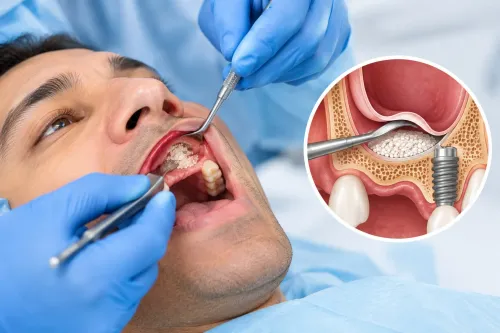
The surgeon elevates and protects the Schneiderian membrane, places the selected graft, closes the site with sutures and gives written instructions before discharge. Graft choice affects handling, but it does not by itself decide whether an implant can be placed immediately.
| Option | Source and handling | Membrane use and implant timing |
|---|---|---|
| Autogenous bone | Your own bone; requires a donor site and extra surgery | A barrier membrane may be added; simultaneous placement depends on primary stability |
| Allograft | Processed human donor bone; ready-made handling | Membrane use depends on the defect; simultaneous or staged placement is possible |
| Xenograft | Animal-derived, processed mineral material | Often used with membrane protection; timing depends on native bone and stability |
| Synthetic substitute | Laboratory-made ceramic or polymer material | May support either plan; the defect and implant stability decide timing |
An implant can sometimes be placed during the lift when remaining native bone grips it firmly. Very little residual bone usually leads to staged healing, followed by implant placement after graft maturation; ask the surgeon for exact dates.
Expect soreness, swelling, bruising, congestion and light bleeding. Plan time away from work according to the procedure and your job, not a fixed online promise. Sutures often need removal after about 7–14 days, while graft healing takes several months.
Do not blow your nose, sneeze with your mouth closed, or perform pressure-generating exercise until the surgeon permits it. These actions can disturb the membrane or graft.
How to compare a sinus lift clinic near me before booking
A low headline price can exclude the parts that determine both safety and the final cost. Before you book sinus lift surgery in Mumbai, ask the sinus lift clinic near me these questions:
- Which clinician will perform the lift, and how regularly do they perform both lateral-window and transcrestal procedures?
- Will the surgeon personally review your CBCT before confirming the technique and implant plan?
- How are sinusitis, blocked drainage, cysts, polyps, membrane thickening and nasal obstruction screened?
- Can the clinic arrange ENT input when the scan or symptoms indicate it?
- Which hospital or clinician handles an after-hours emergency?
| Approach | Access | Planning factor |
|---|---|---|
| Transcrestal | Through the implant osteotomy | Suits selected cases with sufficient residual bone and modest lift requirements |
| Lateral-window | Through an opening in the side wall | Provides wider access when more elevation or multiple implant sites need treatment |
The quote should separate the surgical fee, CBCT, graft and membrane materials, sedation or anaesthesia, medicines, follow-up visits, implant components, and later crown or prosthetic work. A sinus lift is not the same as a completed tooth.
Dr. Karan Mehta's Mouth Jaw Face & Hair Transplant is one Borivali option to evaluate only after verifying the operating surgeon, imaging review, technique choices, complication plan and itemised costs; proximity alone does not establish suitability.
Related service
Face If you are missing teeth in the upper jaw, you may be a candidate for dental implants. View service → |
Frequently asked questions
Why does the maxillary sinus affect an upper-jaw implant plan?
The sinus sits above the upper premolars and molars. Bone loss after extraction can leave too little height for stable implant placement, so augmentation may be needed.
Which tests should a sinus lift surgeon offer before surgery?
Ask for a clinical examination and 3D cone-beam computed tomography scan. The CBCT shows remaining bone height, sinus anatomy, septa, thickening and possible disease.
What must you disclose before sinus augmentation?
Tell the surgeon about sinus infections, nasal blockage, allergies, previous sinus surgery, smoking, diabetes, blood thinners and every medicine or supplement you take.
How long does recovery take after a sinus lift?
Expect swelling and pressure during the first several days. Healing time depends on the technique and implant plan, so obtain a written schedule for reviews, restrictions and implant placement.
How can you compare a sinus lift clinic near Borivali Mumbai?
Compare the surgeon’s relevant training and experience, CBCT access, treatment alternatives, written costs, infection-control practices, emergency contact and follow-up plan.
Keywords