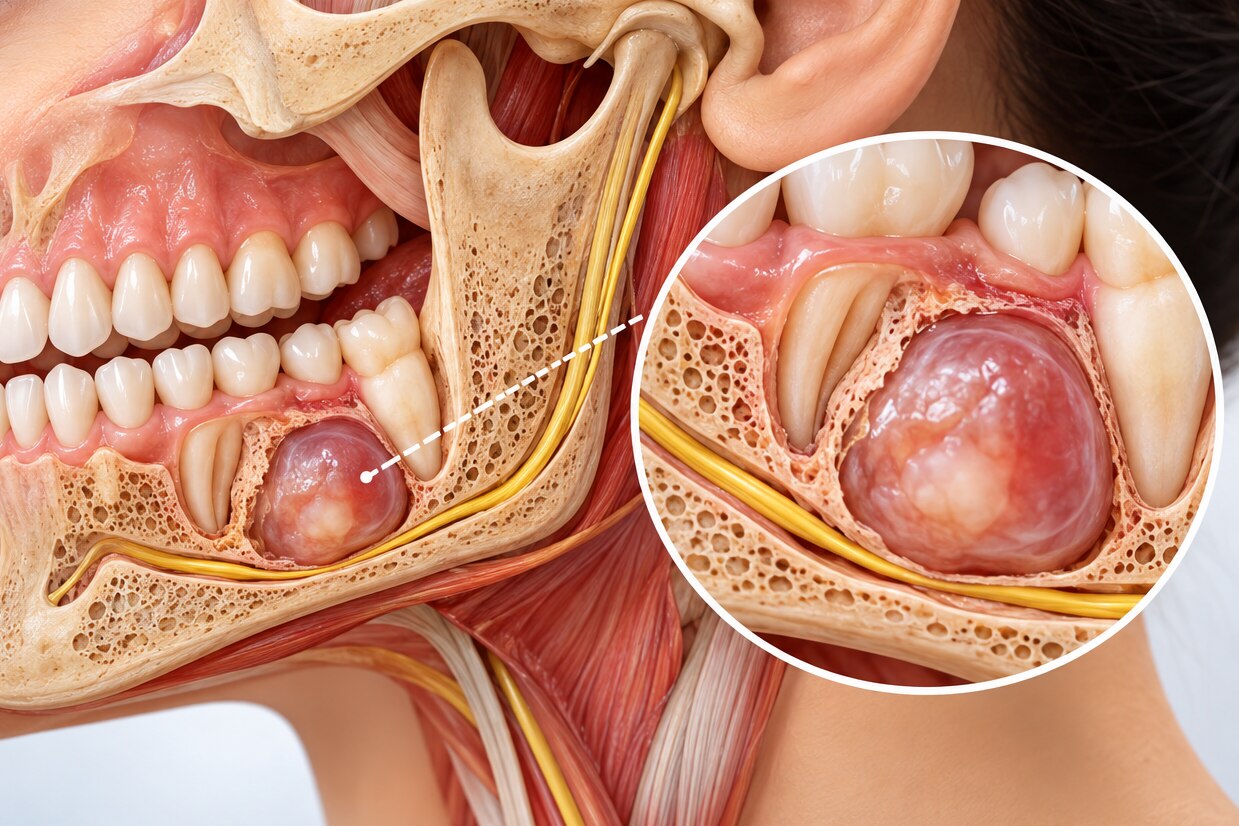
A jaw lesion can threaten nearby teeth, weaken bone, affect sensation and continue growing without causing severe pain. By the end, you will know which symptoms need prompt assessment, how doctors confirm the diagnosis, how surgery is selected, and what to compare before agreeing to treatment.
Key takeaways
- Seek assessment for persistent swelling, pain, drainage, numbness or loose teeth.
- Imaging shows the lesion’s location; biopsy identifies whether it is a cyst, tumor or cancer.
- Choose observation only when imaging, biopsy and follow-up make it safe.
- Compare recovery instructions, nerve risks, recurrence plans and emergency access before surgery.
What benefits can surgery provide, and when should you seek assessment?
Removing a jaw cyst or tumor can clear diseased tissue and eliminate a source of recurrent infection, pressure, drainage and pain. It can protect nearby teeth and nerves, reduce facial swelling, and prevent further bone weakening that could lead to tooth loss or fracture.
Surgery also provides tissue for definitive pathology diagnosis. That result identifies whether the lesion is a cyst, benign tumor, aggressive growth or cancer, guiding further treatment and follow-up. Benefits depend on the lesion’s size, location and behavior; an incidental lesion is not automatically treated.
Arrange prompt assessment for any of these signs:
- A persistent or enlarging lump
- Unexplained tooth movement or loose teeth
- Lower-lip numbness
- Drainage from the gum or jaw
- An altered bite, facial asymmetry or difficulty opening your mouth
Rapid swelling, fever, pus, difficulty swallowing or breathing, uncontrolled bleeding or severe pain require urgent care, not a routine appointment. These symptoms can signal infection, nerve involvement or another complication.
If you are comparing jaw cyst tumor surgery for benefits Borivali or jaw cyst removal benefits Borivali, compare pathology handling, nerve-protection planning and follow-up—not location alone.
How do doctors determine whether the lesion is a cyst, tumor or cancer?
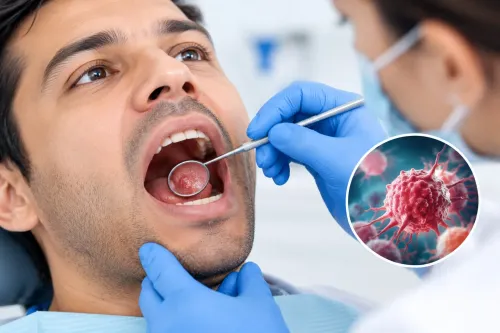
A cyst is usually a fluid- or semisolid-filled sac; a tumor is an abnormal tissue growth. Doctors begin with an oral examination and dental X-rays, including panoramic radiography, to assess teeth and jaw changes.
| Lesion type | Typical meaning | Effect on planning |
|---|---|---|
| Cyst | Sac containing fluid or semisolid material | Aspiration and removal of the lining may be considered |
| Benign tumor | Non-cancerous tissue growth | Observation or conservative surgery may be appropriate |
| Locally aggressive lesion | Growth that damages nearby bone or structures | Wider excision and closer follow-up may be needed |
| Cancerous growth | Malignant tissue capable of invasion or spread | Treatment may require wider surgery and specialist cancer care |
CBCT or CT shows three-dimensional relationships with tooth roots, the inferior alveolar nerve, the maxillary sinus and jaw borders. MRI enters the plan when soft-tissue involvement is suspected. Imaging can suggest a diagnosis, but it cannot replace tissue diagnosis when pathology is required.
Aspiration can reveal fluid, blood or other contents. A biopsy sends tissue for histopathology, where a pathologist classifies the lesion. Any jaw tumor operation benefits depend on that result, its location and its behavior. The diagnosis determines the operation, recurrence discussion and length of follow-up.
Which operation fits the lesion and when is observation unsafe?
The right operation depends on whether the lesion is contained, shrinking, or damaging the jaw. Enucleation removes the cyst lining in one procedure. Curettage scrapes tissue from the cavity, while marsupialisation or decompression creates an opening, lowers pressure and allows the lesion to shrink before definitive treatment.
| Option | What it does | When it fits |
|---|---|---|
| Enucleation | Removes the complete cyst lining | A small, accessible, well-defined cyst |
| Curettage | Scrapes residual lining or abnormal tissue | Selected lesions after the main cavity is removed |
| Marsupialisation or decompression | Creates an opening and reduces pressure | A large cyst, especially when preserving bone or a tooth matters |
| Marginal or segmental resection | Removes part of the jaw, with reconstruction if needed | A large, recurrent, locally aggressive or suspicious lesion |
An unerupted tooth within a lesion may be removed with the cyst; decompression can be considered when the tooth has a realistic chance of being preserved. Observation with repeat imaging suits only a small, stable, clearly characterized lesion. Delay becomes unsafe when infection, expansion, tooth loss, fracture, nerve injury or bone destruction is developing.
The jaw tumor operation benefits therefore depend on pathology, size, location, tooth-preservation goals, reconstruction needs and closeness to the inferior alveolar nerve or maxillary sinus. The search phrase jaw cyst removal benefits Borivali should lead you to compare the plan, not just the clinic’s location.
What happens on the day of jaw cyst or tumor surgery?
The day usually starts with a final review rather than an identical sequence for every patient. Before treatment, the surgeon confirms your consent, reviews the scans and pathology plan, discusses risks, and confirms local or general anaesthesia and whether the procedure will take place in a hospital or day-surgery setting.
- The incision is planned for access while protecting nearby teeth, nerves, blood vessels and, where relevant, the maxillary sinus. An involved tooth may be removed if it is attached to or obstructing the lesion.
- The surgeon removes the planned cyst or tumor tissue, labels the specimen correctly and sends it for histopathology. Imaging can guide the operation, but the tissue report determines the final diagnosis.
- The wound is closed with sutures. A drain is used only when the cavity and operation make fluid collection or monitoring a concern.
If you are comparing jaw cyst treatment near Borivali, ask these questions before signing consent:
- Where will the incision be?
- Will an involved tooth be removed?
- When should the pathology report return?
- Who will explain the result and arrange follow-up?
What is recovery like, and which risks should you compare?
Recovery follows the operation, not the city. A small enucleation may be completed as day surgery, while resection or reconstruction can require hospital care and a longer recovery. A search for jaw tumor surgery recovery Mumbai should not replace an operation-specific plan.
| Procedure | Usual setting | Recovery considerations |
|---|---|---|
| Enucleation | Day surgery or short stay | Swelling and discomfort peak over the first several days; soft foods and limited mouth opening may continue longer |
| Decompression or marsupialisation | Often day surgery | Requires wound care and planned reviews before further treatment |
| Resection with reconstruction | Hospital admission | Longer healing, dietary restrictions and rehabilitation; altered sensation may persist |
Compare infection, bleeding, damage to adjacent teeth, nerve-related numbness, communication with the maxillary sinus, jaw weakening or fracture, and recurrence. Risk increases when the lesion is large or close to teeth, major nerves or the sinus. Ask when reviews and repeat imaging are planned.
Take prescribed analgesia and follow the surgeon’s oral-care instructions. Use a soft diet to protect the wound, and do not smoke because smoking impairs healing.
Seek urgent review for:
- Worsening swelling, fever or pus
- Breathing or swallowing difficulty
- Severe pain, uncontrolled bleeding or inability to open the mouth
- New or increasing facial numbness
How should you compare jaw surgery plans near Borivali?
A search for jaw cyst treatment near borivali should produce more than a nearby clinic name. Compare the lesion’s measurements and location, scan interpretation, distance from the inferior alveolar nerve or maxillary sinus, tooth-preservation plan, reconstruction needs, anaesthesia and hospital setting.
| Plan | What to compare | Why it matters |
|---|---|---|
| Procedure | Enucleation, decompression, curettage or resection | The operation must match the lesion’s size, behaviour and pathology |
| Imaging | Panoramic X-ray, CBCT or CT, and who interprets each scan | Shows roots, jaw borders, nerve and sinus relationships |
| Teeth and reconstruction | Teeth to preserve or remove; graft, plate or other reconstruction | Prevents surprises about function, healing and appearance |
| Pathology | Specimen labelling, histopathology and need for a second review | An aggressive or unusual lesion may need independent pathology review |
| Care setting | Local or general anaesthesia, day surgery or hospital admission | Defines monitoring, transport and immediate support |
| Follow-up | Complication manager, review visits and repeat-imaging interval | Recurrence can appear after symptoms settle |
Ask who manages bleeding, infection, numbness, sinus communication or fracture. Dr. Karan Mehta's Mouth Jaw Face & Hair Transplant is one local option for discussing diagnosis and surgical planning, but location does not determine safety or recurrence risk.
For anyone comparing jaw cyst removal benefits borivali or jaw tumor surgery recovery mumbai, request the written plan and expected recovery timeline before consenting.
Related service
Jaw Jaw Cyst and Tumors Various cysts and tumors can arise in both upper jaw bone(maxilla) and lower jaw bone(mandible). View service → |
Frequently asked questions
What benefits can jaw cyst or tumor surgery provide?
Surgery can remove diseased tissue, reduce infection, pressure, drainage and pain, protect nearby teeth and nerves, reduce swelling, and prevent further bone weakening that could cause tooth loss or fracture.
How do doctors determine whether a jaw lesion is a cyst, tumor or cancer?
Doctors combine an examination with dental X-rays or CT imaging and, when needed, an incisional or excisional biopsy. A pathologist examines the tissue to identify the diagnosis and whether cancer is present.
Which operation fits a jaw cyst or tumor?
The operation depends on the diagnosis, size, position, bone involvement and relationship to teeth or nerves. Options include enucleation, curettage, marsupialization, marginal resection or segmental resection.
What is recovery like after jaw cyst or tumor surgery?
Expect swelling, discomfort and a soft-food diet after surgery. Your surgeon will give instructions for wound care, oral hygiene, medicines, activity and follow-up imaging; recovery length depends on the procedure and reconstruction.
Which risks should patients compare before jaw surgery?
Compare infection, bleeding, recurrence, tooth damage, altered sensation from nerve injury, jaw weakness or fracture, limited opening and the possibility of further surgery. Ask how the team will monitor each risk.
Keywords