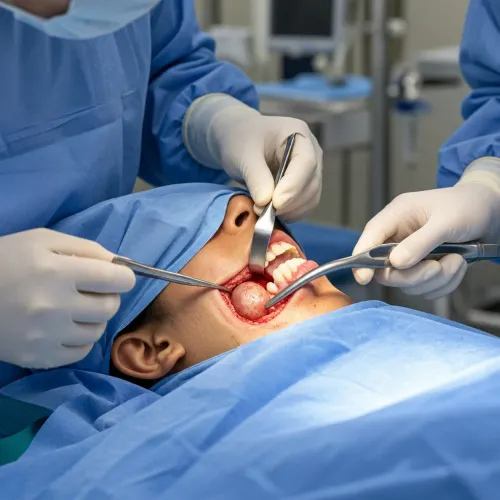
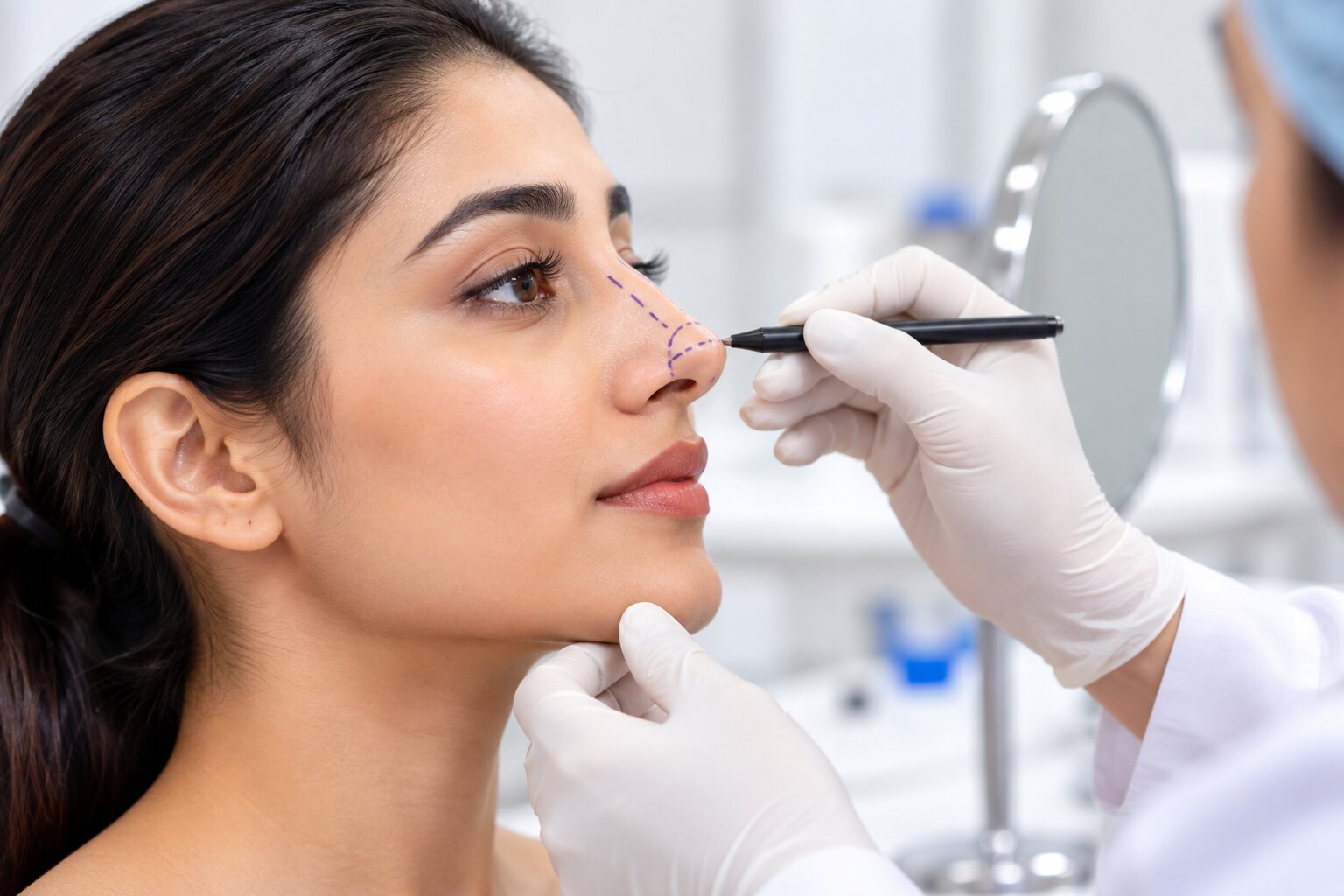
The right rhinoplasty approach depends on which structures create your concern: the nasal bones, septum, bridge, tip cartilage, nostrils or their combination. By the end, you can match common nose concerns to likely surgical approaches and prepare for a consultation that considers breathing, skin thickness and facial balance rather than copying an isolated nose.
Key takeaways
- Match the operation to the structure causing your concern.
- A wide nose may require changes to the bones, cartilage, nostrils, or all three.
- A crooked nose needs functional assessment when the septum or airway is involved.
- Choose open or closed access based on surgical exposure, not scar fear.
Match the Nose Concern to the Structure Being Changed
A dorsal hump, crooked bridge and blocked breathing do not call for the same operation. The search phrase best rhinoplasty type for my nose Mumbai has no single answer: the plan depends on which framework is causing the concern.
| Concern | Structure examined | Usual approach |
|---|---|---|
| Crooked or deviated nose | Nasal bones, septum and cartilage | Septorhinoplasty, with septal correction when breathing is affected |
| Wide bridge | Nasal bones | Osteotomies to narrow and reposition the bones |
| Broad or bulbous tip | Lower lateral cartilages and soft tissue | Tip refinement, with support preserved or added |
| Dorsal hump | Bone and upper cartilage | Dorsal reduction, followed by structural support if needed |
| Flat or depressed bridge | Nasal bridge and middle vault | Augmentation using suitable graft material |
| Nostril flare | Alar base and nostril shape | Alar-base reduction, not bridge narrowing |
| Drooping tip | Tip cartilage and the columella | Tip support and rotation, sometimes with septal work |
A wide nose can involve the bones, middle vault, tip and nostrils together, so narrowing the nostrils alone will not narrow the bridge. A crooked nose also needs internal examination: correcting only the visible bridge can leave a deviated septum or narrowed internal nasal valve untreated.
Open and closed rhinoplasty describe access, not a guaranteed result. Closed surgery uses nostril incisions; open surgery adds a columellar incision for clearer access during complex tip, asymmetry or revision work.
How Rhinoplasty for a Wide Nose Is Planned
A wide nose is narrowed according to where width comes from: nasal bones, middle vault, tip cartilages, nostril base, or several areas together. In rhinoplasty for wide nose mumbai planning, examination also checks the septum and internal nasal valves, because a smaller-looking nose that collapses airflow is a poor result.
| Area | Possible planning focus | Main safeguard |
|---|---|---|
| Nasal bones | Controlled osteotomies to narrow the bony bridge | Avoid an overly narrow bridge or an open-roof deformity |
| Middle vault | Reshape or support upper lateral cartilages | Preserve the internal nasal valve and structural strength |
| Tip | Refine or reposition lower lateral cartilages | Keep tip support, projection and natural definition |
| Alar base | Carefully placed alar reduction when nostril width is excessive | Prevent scars, asymmetry and narrowed nostrils |
| Septum | Straighten a deviated septum when it contributes to blockage or deviation | Improve the framework without removing essential support |
The surgeon compares the proposed width with your forehead, cheeks, lips and chin rather than chasing a tiny nose. Removing too much bone or cartilage can weaken the middle vault, pinch the valves, blunt the tip or leave the bridge unstable; grafts or structural sutures may be needed to maintain support.
Ask how breathing will be assessed before surgery and how the plan changes if you have a deviated septum, valve narrowing, thick skin or previous surgery. Computer images can discuss proportions, but they cannot prove that your airway will remain open.
Why a Crooked Nose Requires More Than Cosmetic Straightening
A crooked nose needs functional assessment, not just a straighter bridge. The search phrase rhinoplasty for crooked nose Mumbai often describes deviation in the nasal bones, septum and cartilage framework; if the septum or internal nasal valves narrow airflow, cosmetic bridge correction can leave blockage or allow the nose to drift back.
| Finding | Correction considered | Why it matters |
|---|---|---|
| External deviation only | Repositioning nasal bones and cartilage | Improves visible alignment while preserving airway support |
| Deviated septum | Septoplasty with rhinoplasty, called septorhinoplasty | Straightening the outside without correcting the septum can leave one-sided blockage |
| Narrow or weak internal nasal valves | Structural support, often using spreader grafts or cartilage reinforcement | Removing too much bridge cartilage can worsen collapse during inhalation |
When breathing is restricted, septorhinoplasty addresses function and appearance in one structural plan. Septoplasty straightens the internal partition; rhinoplasty repositions the bones and cartilage that shape the bridge and tip. The surgeon must preserve or reinforce the middle vault rather than simply reduce it.
During examination, report nasal blockage, allergies, previous injury and prior surgery. Inspection inside the nose matters because photographs cannot show a deviated septum or valve narrowing. Ask whether the plan includes septoplasty, valve support and a strategy to prevent recurrent deviation.
Open or Closed Rhinoplasty: Which Access Is Appropriate?
Closed rhinoplasty uses incisions inside the nostrils; open rhinoplasty adds an incision across the columella, the strip between the nostrils. Neither access automatically produces a better result. Your surgeon chooses based on the visibility and structural work required.
| Access | What the surgeon can do | Why choose it |
|---|---|---|
| Closed | Reach the bridge, septum and selected tip structures through nostril incisions | Suitable for limited corrections, such as a dorsal hump, when adequate access is possible |
| Open | Lift the nasal skin for direct view of tip cartilage, septum and asymmetry | Useful for major tip reshaping, crooked noses, weak support or revision surgery |
Open access leaves a small columellar scar, while closed access avoids that external incision. The trade-off is exposure versus an external incision, not a guaranteed difference in healing or appearance.
Ask why the planned access fits your nasal bones, septum, upper and lower lateral cartilages, skin thickness and breathing. The surgeon should explain whether you need septoplasty, cartilage grafting or valve support; reducing a nose without preserving support can cause collapse or obstruction. Review similar cases, not unrelated photographs.
Your Facial Proportions and Skin Change the Recommendation
Your nose should fit the face around it, not follow an isolated template. A narrow, delicate nose can look lost on a broad face, while a very small or sharply lifted nose can overpower a fine-featured face.
- Forehead and eyes set the upper-face scale: a strong brow or deep-set eyes can support a more defined bridge, while softer features usually suit gentler lines.
- Cheeks and facial width affect nasal width. Broad cheeks or a wide midface can make excessive narrowing look unnatural; the bridge, tip and nostril base must be assessed together.
- Lips and chin control the side profile. A prominent chin can balance a stronger bridge, while a retruded chin or fuller lips can make projection changes appear more dramatic.
- Facial asymmetry matters because perfectly matching a computer image may make natural differences more noticeable. Compare the nose with the eye line, cheek height and mouth position.
- Skin thickness changes what refinement is achievable. Thick, oily skin can hide small tip adjustments and limit definition; thin skin can reveal cartilage edges, dents and minor asymmetry.
Your surgeon should assess these relationships in front and profile photographs, then plan changes that preserve breathing and facial balance rather than chase a fixed nose shape.
What to Check During a Cosmetic Nose Surgery Consultation in Mumbai
A safe cosmetic nose surgery consultation in Mumbai starts with examination, not a photograph or a promised “ideal” nose. The surgeon should assess your skin, nasal bones, tip cartilage, septum, nostrils and internal nasal valves, then ask about blockage, allergies, injury, previous surgery, medicines and smoking. Photographs cannot reveal a deviated septum or valve collapse.
- Bring three specific concerns, such as a crooked bridge, broad nasal bones or a drooping tip, and ask which structure would change for each one.
- Request airflow assessment when you report obstruction. Nasal endoscopy can inspect the septum and valve area; rhinomanometry or another airflow test can add functional evidence.
- Use standardised photographs to compare proportions, not to select a copied nose. Ask how the result will suit your forehead, cheeks, lips and chin.
- Treat computer imaging as a discussion tool, not a promise. Healing, swelling, scar tissue, cartilage memory and existing asymmetry can produce a different result.
- Ask what access fits your anatomy: closed incisions stay inside the nostrils; open rhinoplasty adds a columellar incision for greater exposure in complex or revision cases.
- Compare surgeons by registration, training, who performs each step, and before-and-after cases matching your skin thickness, deformity and surgery history. Dr. Karan Mehta's Mouth Jaw Face & Hair Transplant is one practice to question on these exact points.
- Ask which congestion and swelling are expected, and which bleeding, infection, persistent numbness, breathing difficulty or asymmetry require review or revision.
Related service
Face Cosmetic Nose Surgery -Rhinoplasty Simply put, surgery done to change the shape of nose is called Rhinoplasty. View service → |
Frequently asked questions
Which rhinoplasty type is best for my nose in Mumbai?
The best approach depends on the structure causing the concern, such as the nasal bones, cartilage, septum, skin, or nostrils.
How is rhinoplasty for a wide nose planned in Mumbai?
Planning identifies whether width comes from the nasal bones, lower cartilage, nostrils, skin thickness, or a combination before selecting the required changes.
Why does a crooked nose require more than cosmetic straightening?
A crooked nose can involve the septum, nasal bones, cartilage, or airway. Treating only the visible angle can leave breathing problems or cause the nose to shift again.
How do you choose between open and closed rhinoplasty?
The choice depends on how much access and visibility the surgeon needs for the planned structural changes, especially in complex or revision surgery.
What should you check during a cosmetic nose surgery consultation in Mumbai?
Ask which structure causes your concern, how breathing will be assessed, which approach is proposed, what risks apply to your anatomy, and how results will be evaluated.
Keywords