The process begins with finding out why your hair is thinning, not with choosing a graft number. By following each stage—from diagnosis and planning to wound care, shedding and regrowth—you can prepare for the appointment, compare treatment plans and recognise recovery changes that need medical attention.
Key takeaways
- Confirm the cause and stability of hair loss before choosing transplantation.
- Review hairline design, donor supply, graft numbers and technique with your surgeon.
- Protect grafts during the first days by following washing, sleeping and activity instructions.
- Expect early shedding before visible growth develops over several months.
The consultation establishes whether transplantation is appropriate
Suitability is decided by the cause and stability of your hair loss, the health of your scalp, and the donor follicles available—not by the number of grafts you request.
1. The hair transplant consultation process begins with your medical and family history. The clinician asks when shedding started, whether it is sudden or gradual, what treatments and medicines you use, and whether close relatives have pattern hair loss. They examine the scalp, hair calibre, density, and visible signs of inflammation or scarring.
2. The clinician maps loss across the front, crown, and mid-scalp, photographs your hair, and measures the donor area at the sides and back. Donor supply is finite, so the assessment includes future native-hair loss rather than only today’s baldness. One graft can contain one, two, or several hairs.
3. Blood tests or a scalp biopsy may be needed when the diagnosis is unclear, shedding is rapid, or another scalp condition is suspected. Active disease and unstable hair loss usually require treatment before surgery.
The clinician may discuss minoxidil or finasteride when appropriate, based on your diagnosis, medical history, sex, pregnancy potential, and side-effect concerns.
You are a stronger candidate when expectations match achievable density, donor hair is adequate, and your scalp and general health support surgery. The consultation should also explain that transplantation redistributes follicles; it does not stop future loss or create unlimited hair. This assessment determines whether surgery belongs in your hair restoration treatment process at all.
The surgical plan determines the hairline, graft supply and technique
The plan fixes three variables before surgery: how many grafts the donor area can safely supply, where the hairline should sit, and which harvesting method suits your scalp and goals.
A graft is a follicular unit, not one hair; it may contain one, two, three or more follicles, so compare quoted graft numbers only after asking for the estimated hair count.
- The surgeon measures donor density, hair calibre, scalp condition and the extent of thinning. The estimate must leave enough supply for future recession, not simply fill every visible gap.
- The hairline is drawn while you are sitting or standing, then adjusted for facial proportions and age. One-hair grafts usually create the soft front edge; larger units behind it add coverage. Each site must match the existing hair’s angle, direction, spacing and curl, or straight rows can look pluggy.
- The surgeon selects FUE or FUT after weighing donor supply, hairstyle, scarring, session size and your preference. This decision forms part of the hair transplant procedure steps and the wider hair restoration treatment process.
| Method | What happens | Main trade-off |
|---|---|---|
| FUE | Individual follicular units are removed with small punches | Many small scars; overharvesting can visibly thin the donor area |
| FUT | A hair-bearing strip is removed, closed with a linear scar, and dissected into grafts | One linear scar, with efficient graft collection in suitable patients |
Dr. Karan Mehta's Mouth Jaw Face & Hair Transplant should document the proposed graft count, hairline design and FUE or FUT reasoning before you consent.
Related service
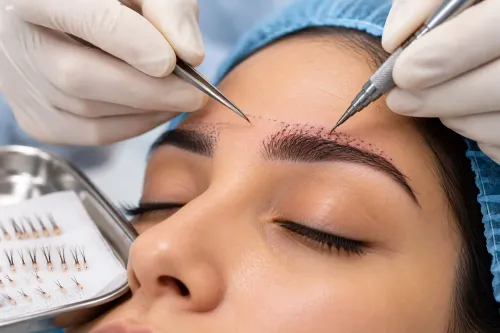
Hair Here's how the eyebrow transplantation process generally works: Donor Hair Extraction: The surgeon will first identify a suitable donor area on the... View service → |
The procedure day moves follicles from the donor area to planned sites
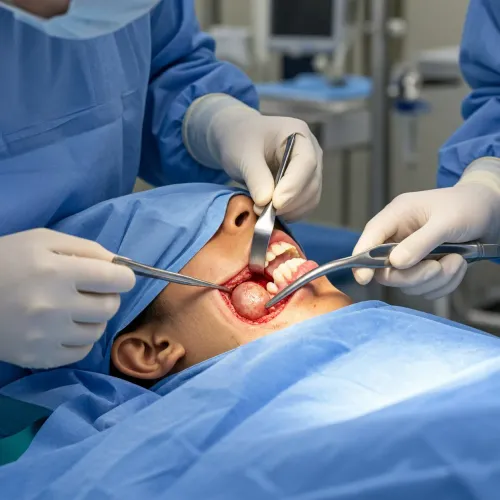
Consent comes before any incisions. The surgeon confirms the planned hairline, graft number, harvesting method, expected density, risks and alternatives, then checks your medicines and health on the day. Most operations use local anaesthetic and take several hours as an outpatient.
1. The scalp is photographed and marked while you are sitting or standing. This keeps the hairline and graft distribution accurate; markings can look different when the scalp is stretched or you are lying down.
2. The donor and recipient areas are cleaned and sterilised. Local anaesthetic is injected into the scalp, so you remain awake while the area becomes numb.
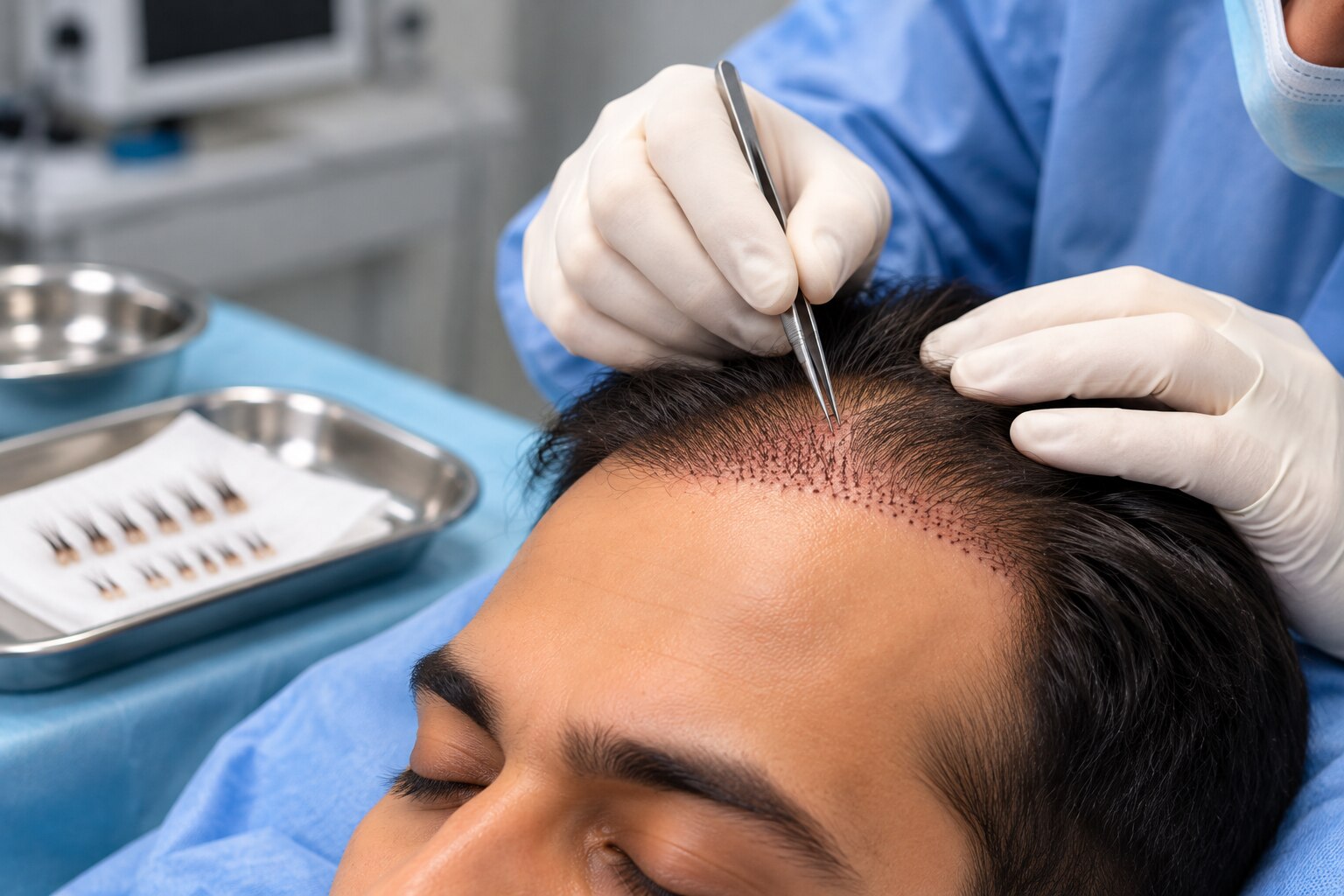
3. The team harvests follicles from the sides or back. With follicular unit excision, small punches remove individual follicular units; with follicular unit transplantation, a strip is removed and the donor wound is closed before the strip is divided into grafts.
4. Technicians inspect and sort the grafts under magnification. The surgeon creates tiny recipient sites at the marked angles and directions, then places each graft into a site.
5. The team checks the grafts and donor area, applies any dressing required and explains washing, sleeping position, medicines and activity limits. These are the key hair transplant procedure steps and show what happens during a hair transplant on the operative day.
6. Before discharge, you receive written warning signs and a contact number. Arrange an adult to accompany you if your clinic advises it, and leave only after the team confirms that you are ready.
The first days focus on protecting grafts and managing normal reactions
During the first 24 hours, protect the grafts from rubbing, pressure and scratching. Keep the recipient area dry or wash it only as instructed, take prescribed pain relief, and sleep with your head elevated. Tenderness, tightness and small spots of blood are common.
The hair transplant day by day pattern is usually:
| Day | What you may notice | What to do |
|---|---|---|
| 1–2 | Soreness, tightness and mild redness in the donor and recipient areas | Avoid touching grafts; follow washing and medication instructions |
| 2–4 | Forehead or eyelid swelling can appear | Keep your head elevated and contact the clinic before taking an unapproved medicine |
| 4–7 | Small crusts or scabs remain around grafts | Do not pick them; gentle washing helps them loosen |
Call the surgical team for increasing pain rather than improving discomfort, spreading redness, pus, fever or significant bleeding. Also call if swelling affects your vision, becomes severe, or does not follow the clinic’s instructions.
Crusts often clear over 7–10 days. Visible hair shafts can shed during the following weeks while the follicles remain in place; shedding alone does not prove graft failure. Use your clinic’s written hair transplant day by day instructions, because washing, exercise and medication rules differ.
This careful period is a small but important part of the hair restoration treatment process.
Growth, shedding and follow-up unfold over several months
By days 7 to 10, most small crusts have cleared if you follow the washing instructions. Tenderness and tightness usually settle, while forehead or eyelid swelling should be assessed if it worsens rather than improves.
The hair transplant day by day timeline then becomes less visible but not symptom-free:
- During the following weeks, transplanted hair shafts often shed. This “shock loss” does not necessarily mean the follicles have failed; the follicles can remain beneath the skin and produce new shafts later.
- Around three to four months, early new growth commonly appears. It may look thin, uneven or fine at first.
- From six to twelve months, hair usually gains length, calibre and coverage as the result matures.
Temporary shedding can also affect nearby native hair. Persistent, extensive or rapidly worsening loss needs clinical assessment because it may reflect continuing pattern hair loss rather than normal post-operative shedding.
Follow-up appointments compare standardized photographs, recipient-area coverage, hair calibre and the condition of the donor area. The clinician also reviews ongoing native-hair loss and whether medical treatment is needed to protect non-transplanted follicles.
What happens during a hair transplant includes long-term planning: a second procedure for coverage or refinement is considered only after the first result matures. The donor supply is finite, and aggressive repeat surgery can cause visible depletion and reduce options for future loss.
Frequently asked questions
What happens during a hair transplant consultation?
The surgeon assesses your hair-loss cause and stability, scalp health and available donor follicles to decide whether transplantation suits you.
What does the surgical plan cover?
It sets the hairline, estimates graft supply and selects the technique for moving follicles into planned sites.
What happens on the day of a hair transplant?
The team prepares the donor and recipient areas, removes follicles from the donor area and places them into the planned sites.
What happens during hair transplant recovery?
The first days focus on protecting grafts and managing normal reactions, followed by shedding and gradual growth over several months.
Keywords