A jaw can look weak because the mandibular angle lacks width, the chin sits too far back, or the lower face does not balance the cheekbones, nose, and lips. By the end, you will know which areas implants can change, whether added contour fits your anatomy, and what to verify before choosing surgery.
Key takeaways
- Jaw implants add projection or width; they do not lift every facial feature.
- Choose implants only after checking whether the issue is chin, jaw angle, or facial width.
- Ask for implant material, placement site, risks, recovery limits, and follow-up schedule.
- Compare implants with fillers, fat grafting, genioplasty, or orthognathic surgery.
How jaw implants change facial balance and definition
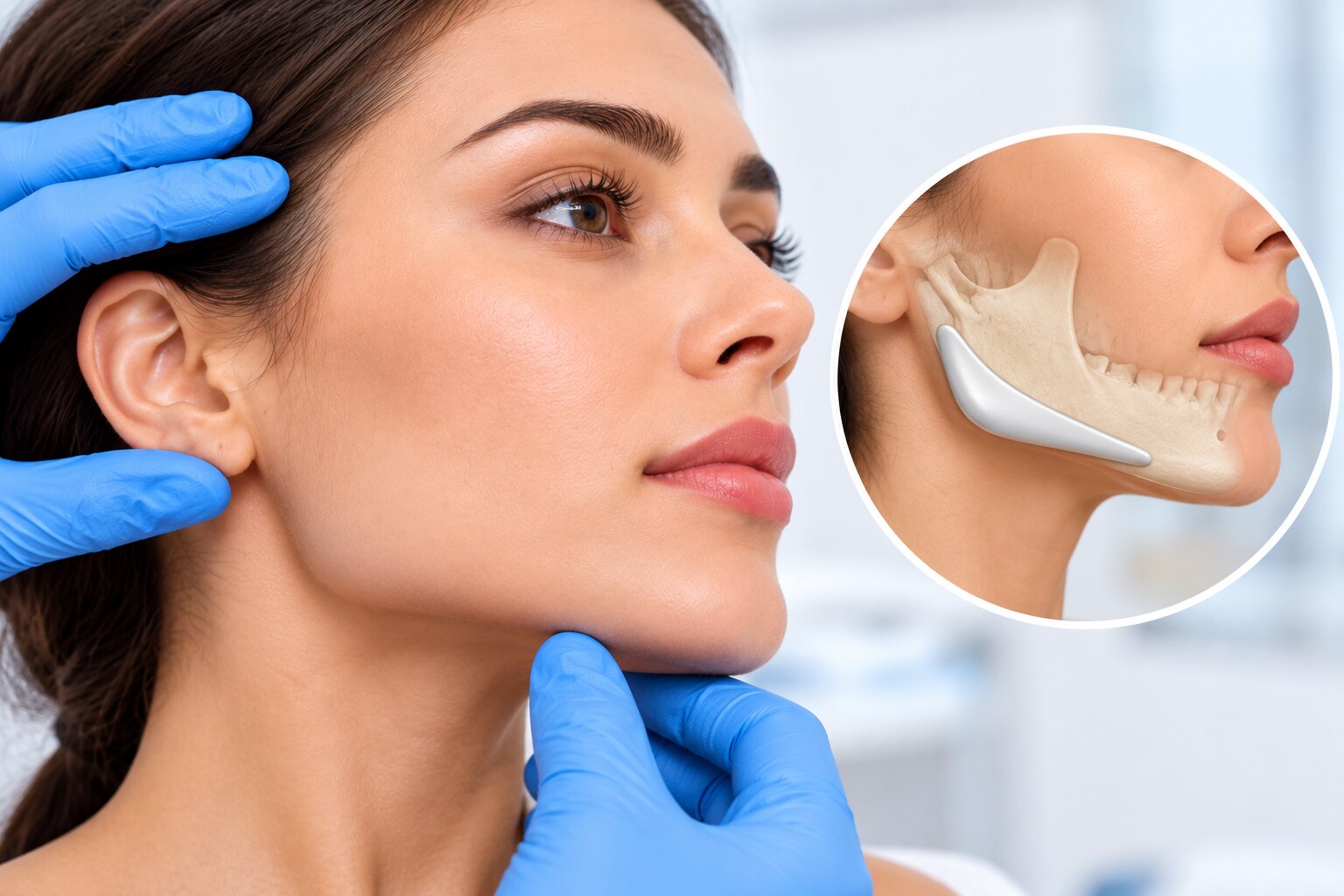
An implant changes facial balance by adding selected projection or width to the mandible, not by lifting every feature into proportion. A chin implant projects the central lower face; an implant on the mandibular body, angle, or ramus widens the lower face and strengthens the visible line from the ear toward the chin.
A planned combination can alter both width and profile, but a jaw implant does not automatically enlarge the chin or move the teeth.
Judge the planned change in this order:
1. Compare the lower facial third with the forehead and midface. Check whether added jaw width improves cheek-to-jaw proportion or makes the lower face look heavy beside the cheekbones, nose, and lips.
2. Separate projection from width. Chin projection mainly changes the profile and chin position. A wider mandibular angle creates stronger lateral definition; body and ramus implants extend that effect along the jawline.
3. Review consistent before-and-after photographs: the same angles, camera distance, lighting, facial expression, and healing stage. A swollen early image or a different head tilt can exaggerate the claimed result.
A larger jaw is not automatically more attractive or masculine. The design must suit your facial width, cheekbones, nose, lips, chin position, skin envelope, age, soft-tissue thickness, and fat distribution. A large implant can make existing asymmetry more visible.
Search terms such as jaw implants for benefits mumbai should lead to proportion-based planning, not a promise of guaranteed symmetry.
Who benefits from implants, and when another treatment fits better
An implant fits when the problem is a contour deficiency that needs added projection or width, not when the jaw bones or bite need repositioning. Suitable candidates are adults with stable facial growth, healthy soft tissue, a proportionate bite, and realistic expectations about asymmetry and profile change.
Use this candidate checklist:
- Stable facial growth and no active dental or facial infection
- Healthy soft tissue with enough coverage for the planned implant
- Proportionate bite without a major overbite, underbite, or open bite
- A clear goal, such as more chin projection or a wider jaw angle
- Willingness to accept healing time, possible asymmetry, and revision risk
A chin implant mainly changes the lower-face profile. Mandibular angle or body implants increase perceived width, while combining sites changes both projection and width.
Choose the treatment that matches the problem:
- Genioplasty moves the chin bone when its position needs correction.
- Orthognathic surgery moves the jaw bones and treats major skeletal discrepancies.
- Fillers add temporary soft-tissue volume without changing bone.
- Buccal fat removal reduces cheek fullness rather than enlarging the jaw.
- Masseter Botox reduces muscle bulk and can make the lower face look narrower.
Seek orthodontic, oral and maxillofacial, TMJ, or airway assessment for a significant bite problem, chewing or speech difficulty, TMJ disease, airway concern, severe skeletal asymmetry, or a need to move bone. Active infection or uncontrolled illness also makes a cosmetic implant inappropriate until the underlying issue is addressed.
What a proper consultation and implant plan should include
A proper plan starts with your whole face, mandible, bite, and goals—not a front-facing photograph. The surgeon should assess candidacy, implant location, size, and design using frontal and profile photographs, facial measurements, palpation, dental history, bite and occlusal examination, and a review of facial asymmetry.
Jaw implants add contour; they do not correct a displaced bite or move teeth.
Three-dimensional cone-beam CT, other CT imaging, or cephalometric analysis is added when bone anatomy or the surgical plan requires it. Ask the surgeon to explain why imaging is or is not needed.
Prefabricated and custom implants follow different planning paths:
| Option | Planning benefit | Main trade-off |
|---|---|---|
| Prefabricated implant | Established shapes and simpler planning | May match your bone and target contour less closely |
| Custom patient-specific implant | Designed around your anatomy and planned contour | Requires more design time and planning expense |
Silicone elastomer is relatively easier to remove or replace. Porous polyethylene permits tissue ingrowth that can improve stability, but later removal is more difficult.
Request a written plan covering:
- The proposed map for the mandibular body, angle, ramus, and chin
- Implant material, manufacturer, dimensions, and design
- Incision route, fixation method, and anaesthesia
- Expected changes to width, projection, and asymmetry
- The plan if removal or revision becomes necessary
If you search “facial implants Mumbai,” compare this documentation rather than choosing from photographs alone.
What surgery, recovery, and risks involve in real terms
Plan transport home, time away from work, soft foods, prescribed oral hygiene, elevated sleeping, and help for the first few days. Preparation also includes discussing nicotine use; smoking and nicotine impair wound healing and increase concerns about infection, wound separation, and delayed recovery.
- After anaesthesia, the surgeon makes an incision inside the mouth or near the jaw, depending on the plan.
- The surgeon creates a pocket, places the implant along the mandibular body, angle, ramus, chin, or planned combination, and fixes it to prevent movement.
- The wound is closed, and you are monitored while the anaesthetic wears off.
- Recovery includes bruising, swelling, tightness, restricted chewing, and temporary lip or chin numbness. Follow the specific instructions for diet, exercise, work, oral hygiene, and review visits.
The immediate shape is not the final contour: swelling must substantially settle before you judge definition. Ask about infection from oral bacteria, bleeding, mental-nerve irritation, persistent numbness, malposition, asymmetry, palpability, visibility, wound problems, exposure, tissue or bone changes, and capsular problems. Infection or poor healing can require antibiotics, drainage, implant removal, or delayed replacement.
Revision or removal remains possible. A consultation for jaw implant surgery Mumbai should explain the exact incision, fixation, recovery schedule, warning signs, and contingency plan rather than presenting the operation as low-maintenance.
How to choose a Mumbai provider and plan follow-up
Compare providers for jaw implants Borivali, jaw implant surgery Mumbai, or facial implants Mumbai using records and arrangements, not branding. Confirm that the clinician is registered and trained in oral and maxillofacial surgery or plastic surgery, and performs implant operations rather than only injectables.
Dr. Karan Mehta's Mouth Jaw Face & Hair Transplant is one local clinic where you can ask these questions.
| Provider check | What to verify | Why it matters |
|---|---|---|
| Registration and training | Registration number, specialty qualification, and implant experience | Confirms appropriate surgical competence |
| Operating facility | Where surgery occurs, anaesthesia arrangements, sterility, and emergency transfer plan | A clinic consultation room is not an operating facility |
| Complication cover | Named clinician for dental, nerve, airway, infection, displacement, and revision problems | You need responsibility after surgery |
| Documents | Imaging-based plan, implant details, informed consent, and revision or removal policy | Prevents vague promises and surprise decisions |
Obtain a written follow-up schedule with review dates and an emergency telephone contact. Budget for:
- Preoperative appointments, photographs, bite assessment, and indicated CT or other imaging
- Transport home, help during early swelling, work leave, and sleeping arrangements
- Soft-food supplies, prescribed oral-hygiene products, and diet restrictions
- Review visits through healing, not only the first postoperative check
Reject promises of guaranteed attractiveness, perfect symmetry, or emotional change. A functional claim about sleep, chewing, or TMJ also needs a separate diagnosis and treatment plan.
Related service
Jaw also known as mandibular implants or jawline implants, are a type of facial augmentation procedure used to enhance the size and shape of the lower... View service → |
Frequently asked questions
How do jaw implants improve facial balance and definition?
A chin implant projects the central lower face, while implants on the mandibular body, angle, or ramus add width and strengthen the jawline from the ear toward the chin.
Who benefits from jaw implants, and when is another treatment better?
Implants suit people seeking structural projection or width after assessment of their facial proportions. Fillers or fat grafting suit temporary or smaller changes, while genioplasty or orthognathic surgery fits selected bone-position or bite problems.
What should a jaw implant consultation and plan include?
The consultation should assess facial proportions, bite, teeth, skin and soft tissue, implant location, material, size, fixation method, incision route, expected limits, risks, and follow-up.
What do jaw implant surgery and recovery involve?
Surgery involves placing the implant through an intraoral or external incision. Recovery includes swelling, restricted activity, oral-care instructions, pain control, and scheduled reviews; risks include infection, asymmetry, nerve symptoms, shifting, and the need for revision.
How do you choose a Mumbai jaw implant provider and plan follow-up?
Check the surgeon’s relevant qualifications and experience, ask where surgery occurs, confirm emergency access, obtain a written treatment plan, and schedule reviews before proceeding.
Keywords