Sparse or uneven eyebrows can result from over-plucking, scars, burns, trauma, illness or natural growth patterns, and each cause changes the safest treatment plan. You will learn how to assess candidacy, approve a natural brow design, prepare for surgery, judge recovery and compare transplantation with less permanent options.
Key takeaways
- Confirm the cause of hair loss before planning eyebrow grafts.
- Choose a brow design that matches your facial proportions and donor hair.
- Ask how grafts will be angled, spaced and trimmed after growth.
- Plan for shedding, new growth and long-term eyebrow maintenance.
Before surgery: consultation, diagnosis and brow design
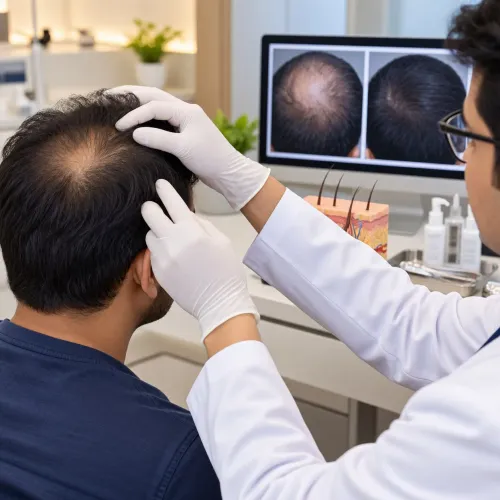
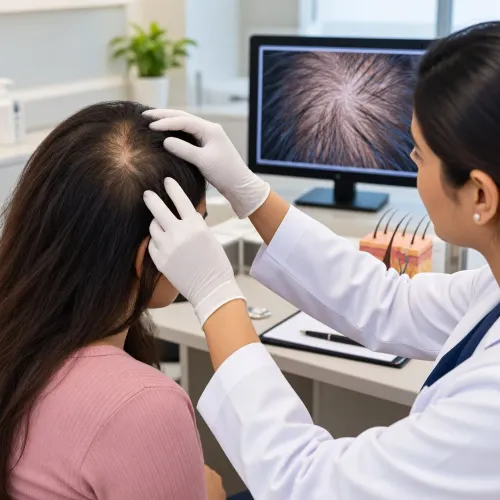
An eyebrow transplant consultation in Mumbai should establish suitability before anyone discusses a fashionable shape. The clinician reviews why the hair is missing, examines the brow skin and donor area, and checks whether transplantation could survive in the recipient tissue.
1. Expect questions about over-plucking, burns, trauma, surgery, previous eyebrow tattooing or transplantation, autoimmune and scarring conditions, thyroid disease, nutritional problems, medicines and allergies. Active inflammatory disease or untreated scarring alopecia can destroy transplanted follicles, so diagnosis and treatment come first. Non-scarring loss, such as over-plucking, is a different situation.
2. The clinician assesses donor hair density, calibre, curl, direction and whether enough suitable follicles exist. Graft numbers are individual: filling small gaps may need several dozen, while near-total reconstruction may require several hundred. A universal promised number is not a treatment plan.
3. Brow design happens while you sit upright. The clinician considers facial symmetry, brow length, thickness, arch, tail position, natural hair direction and how facial proportions may change with age. A design copied from a photograph or drawn while reclining can look uneven when you stand.
Before agreeing, ask who will harvest the donor follicles and create recipient sites, how many single-hair grafts are planned, how the donor area will be protected, and what follow-up and emergency contact you receive. Request comparable photographs taken after adequate follow-up, not only early results.
Also discuss scalp hair’s ongoing growth, which can require frequent trimming and brushing to maintain brow alignment.
During the procedure: how eyebrow grafts are placed
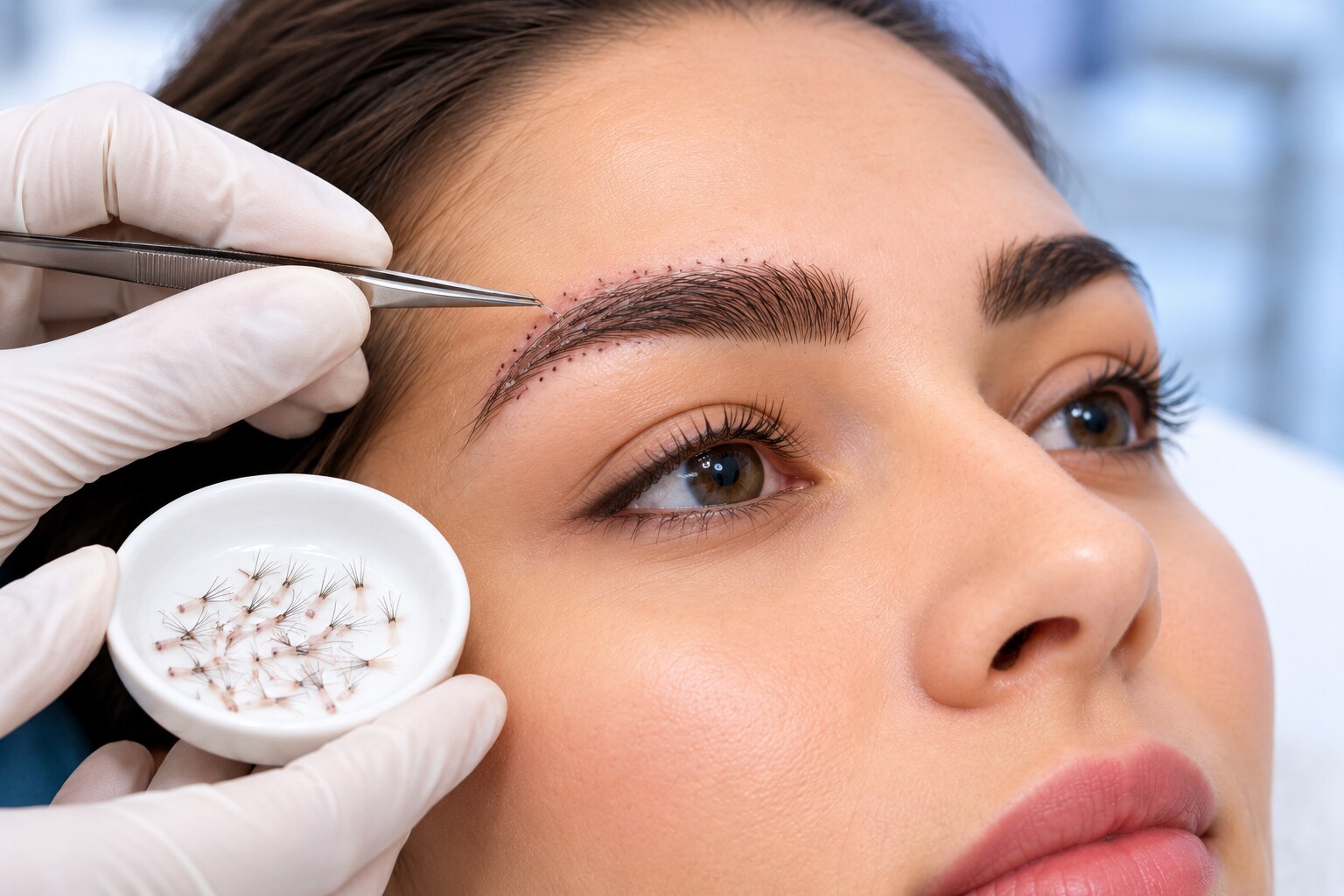
The eyebrow transplant process in Mumbai starts with medical checks, not incision. The clinician confirms the cause of loss, reviews previous brow procedures and medicines, examines donor hair behind or above the ears, and photographs your face. While you sit upright, the brow length, arch, thickness, tail and symmetry are drawn for your approval.
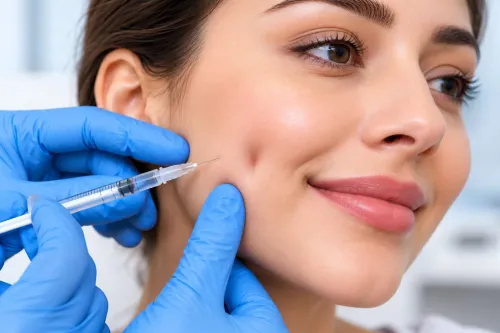
- Local anaesthetic numbs the donor and eyebrow areas; oral sedation is added when appropriate.
- The surgeon harvests follicles using FUE, with a small punch, or removes a strip for FUT before dissecting it into grafts. The choice depends on donor characteristics, graft numbers and scarring concerns.
- Grafts are sorted under magnification. Predominantly single-hair grafts are selected because multi-hair units can look coarse or plug-like.
- The surgeon creates tiny recipient sites that follow each brow hair’s angle, direction and spacing.
- Each graft is inserted carefully, protecting its follicle and matching the approved design.
Eyebrow and scalp transplantation use the same basic graft principle, but placement demands differ:
| Feature | Eyebrow transplant | Scalp transplant |
|---|---|---|
| Graft choice | Mostly single-hair units | Single- or multi-hair units |
| Placement | Very shallow, precise angles and changing directions | Angles and direction vary by scalp zone |
| Goal | Imitate fine, naturally irregular brow growth | Build coverage and density |
An eyebrow hair transplant procedure takes fewer grafts than many scalp sessions, yet each placement is highly visible. Poor angle, spacing or direction can leave a brow patchy or permanently unnatural, and limited donor hair prevents unlimited density.
Is transplantation the right choice? Alternatives and trade-offs
A transplant is preferable when you have stable eyebrow hair loss, enough suitable donor hair, and want real hairs that continue growing rather than a surface effect. The eyebrow hair transplant procedure still involves surgery, limited donor supply, healing time, possible patchy growth and regular trimming, so it is not automatically the best answer.
| Option | Best fit | Main trade-off |
|---|---|---|
| Pencils or powders | Daily shape or density changes | Wash off and require application |
| Tinting | Darkening existing brow hairs | Does not restore missing hairs; results fade |
| Microblading or nanoblading | A drawn appearance without hair growth | Pigment fades, can blur or change colour, and does not mimic every real hair |
| Brow lamination | Temporarily directing existing hairs upward | Adds no density and can irritate skin |
| Surgical brow lift | Drooping brows or excess upper-eyelid skin | Lifts position but does not replace absent hairs |
| Eyebrow transplant | Stable loss with adequate donor hair and a long-term preference | Surgery, donor scars, uneven growth and ongoing trimming |
Delay surgery until unexplained loss has been assessed, especially with active skin inflammation, scarring disease, uncontrolled thyroid or nutritional problems, or a recently performed brow procedure.
Postpone it if you are still changing the desired shape, lack adequate donor hair, or expect a lift in brow position; a transplant adds hairs but does not raise the brow. Get the underlying diagnosis stable first.
After surgery: recovery, growth and long-term maintenance
Eyebrow transplant recovery usually begins with mild swelling, redness and tiny crusts around the implanted hairs. Do not pick or scrub them; follow the clinic’s washing instructions because aggressive shampooing or unapproved products can dislodge grafts.
- Protect the grafts from rubbing, pressure and scratching during early healing.
- Avoid strenuous activity until your surgeon permits it.
- Keep direct sun off the treated area and use only approved protection.
- Contact the clinic promptly for worsening pain, spreading redness, pus, fever, heavy bleeding or swelling that is increasing rather than settling.
- Report persistent numbness, marked asymmetry or grafts that appear repeatedly displaced.
The visible hairs commonly shed during the first several weeks. That does not necessarily mean graft failure: the follicle can remain beneath the skin while the implanted shaft falls out.
New growth is gradual, often becoming noticeable around three to four months, with thickness, direction and texture continuing to mature for roughly nine to twelve months.
Transplanted scalp hairs keep growing at scalp speed, unlike native eyebrow hairs. Once established, they may need trimming every few days or weekly, depending on growth, and brushing or light styling to keep them aligned with the brow. Do not cut them until the clinic confirms healing is complete.
Patchy growth, infection, unnatural direction or the need for a touch-up can still occur. If hair loss resulted from active inflammatory or scarring disease, treat that condition first; transplanting into unstable skin can lead to poor growth or follicle loss.
Planning treatment in Mumbai: questions, safety and treatment-day logistics
Book only after a medical consultation, not a design appointment alone. The phrase “eyebrow transplant Mumbai procedure” should lead you to a clinician who investigates the cause of loss, including over-plucking, scarring alopecia, burns, trauma, thyroid disease, nutritional problems and active inflammation.
1. Ask who will personally assess you, harvest donor follicles and create recipient sites. Confirm the clinician’s surgical role rather than assuming every step is performed by the named doctor.
2. Request the planned number of single-hair grafts, donor-area protection, brow design method and the technique used to control each hair’s angle and direction. Approve the shape while seated upright, not from a reclining photograph.
3. Give the clinic a complete list of prescriptions, anticoagulants, antiplatelet drugs, supplements, allergies, diabetes history, smoking status and previous brow procedures. Never stop a prescribed blood thinner without agreement from the clinician who prescribed it.
4. Ask to see comparable before-and-after cases with a stated follow-up interval, not only fresh photographs. Ask what happens if growth is poor, asymmetry appears or an infection develops.
5. Get written instructions for washing, sun protection, rubbing, pressure, exercise, approved products and the emergency contact. Confirm follow-up visits and who answers concerns after you return home.
Dr. Karan Mehta's Mouth Jaw Face & Hair Transplant is one Mumbai clinic where these questions belong in the consultation record. Bring medication packets or photographs, allergy details and previous treatment records so the team can check them accurately.
Related service
Hair Here's how the eyebrow transplantation process generally works: Donor Hair Extraction: The surgeon will first identify a suitable donor area on the... View service → |
Frequently asked questions
What happens during an eyebrow transplant consultation in Mumbai?
The clinician investigates why the hair is missing, examines the brow skin and donor area, assesses suitability, and discusses brow shape and expected results.
How are grafts placed during an eyebrow hair transplant procedure?
Individual hair grafts are positioned in the recipient area with attention to direction, angle, spacing and the natural division of the eyebrow.
Is an eyebrow transplant the right choice for everyone?
No. Suitability depends on the cause of hair loss, the condition of the brow skin, donor-hair availability and whether alternatives better match your goals.
What is eyebrow transplant recovery like?
Recovery includes early redness or swelling, a period when transplanted hairs shed, and later growth. You also need ongoing trimming because scalp-derived hairs keep growing.
What should you ask before scheduling treatment in Mumbai?
Ask about diagnosis, surgeon experience, graft design, donor area, risks, aftercare, follow-up visits, treatment-day logistics and the expected growth timeline.
Keywords