A weak eyelid after facial-nerve palsy, trauma, tumour surgery, or stroke can leave the cornea exposed, but a permanent eyelid weight is not the right answer for every patient. You will be able to match your symptoms and examination findings against the usual eligibility criteria, compare alternatives, and prepare specific questions for an eye implant consultation in Mumbai.
Key takeaways
- Persistent lagophthalmos from facial-nerve weakness is the main indication.
- Corneal exposure, tear-film health, eyelid movement, and nerve recovery guide suitability.
- Compare a gold weight with lubricants, moisture chambers, eyelid taping, and surgery.
- Ask about implant position, visibility, extrusion, revision, and total treatment costs.
Who is usually considered for an eye gold implant?
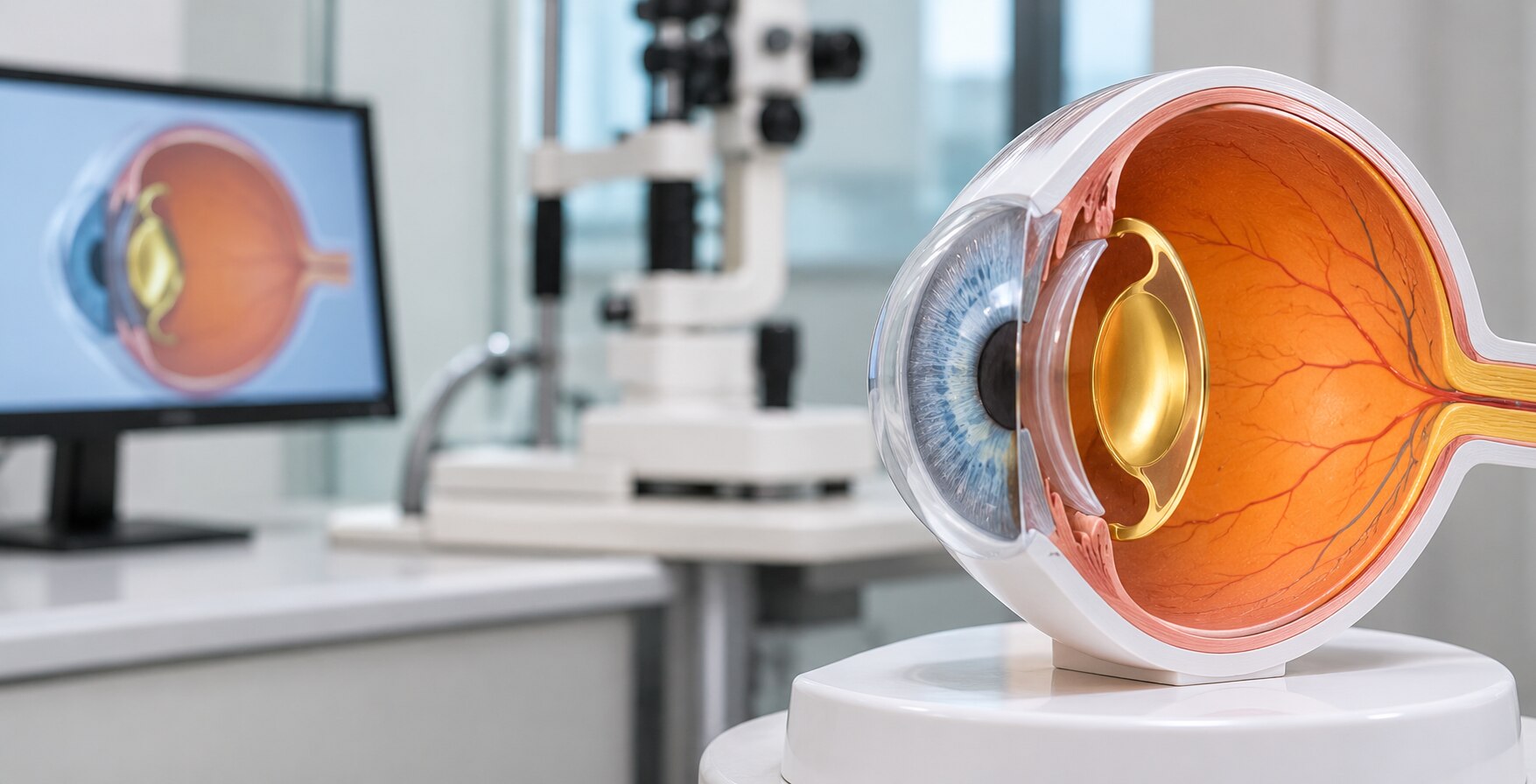
An eye gold implant is a small weight fixed inside the upper eyelid to help gravity close a weak or paralysed lid. Possible gold eye implant patients include people with facial-nerve palsy from Bell’s palsy, stroke, trauma, tumour surgery, or another cause of persistent lagophthalmos. It is not a cosmetic implant or an artificial eye.
A surgeon may consider you when all of these apply:
- Your upper eyelid does not close fully, especially during sleep.
- The exposed cornea shows drying, staining, irritation, or ulcer risk.
- The weakness has been assessed over time, and spontaneous nerve recovery is unlikely or incomplete.
- Lubricating drops, ointment, moisture protection, or temporary closure have not provided reliable protection.
- Examination shows paralytic weakness rather than thyroid eye disease, scarring, proptosis, or another problem requiring different treatment.
| Option | Situation | Requirement before choosing it |
|---|---|---|
| Temporary protection | New facial palsy with possible nerve recovery | Protect the cornea while recovery is assessed |
| Permanent gold weight | Persistent paralytic lagophthalmos | Confirm stable weakness, suitable eyelid anatomy, and a protectable ocular surface |
| Different eyelid treatment | Scarring, severe proptosis, infection, or another structural cause | Treat the underlying condition first |
Before permanent implantation, an ophthalmic or oculoplastic surgeon must examine eyelid closure, blink strength, corneal staining, tear production, facial-nerve function, and previous records. Ask who can get an eye gold implant in Mumbai only after these findings support implantation; adequate nighttime closure or active infection argues against it.
Which examination findings decide eye gold implant suitability?
Persistent incomplete closure is established by observing the eyelids at rest, during a blink, and during gentle forced closure. The surgeon records the gap in millimetres, blink strength, overnight symptoms, and how long the weakness has lasted, then checks facial-nerve recovery and previous treatment.
A temporary problem after recent palsy may call for protection while recovery is assessed, not immediate permanent implantation.
The cornea decides how urgent protection is. Examination includes fluorescein staining for exposure defects, corneal-sensation testing, tear-production measurement, tear-drainage assessment, Bell phenomenon, lower-eyelid position, and ocular-motor function. Pain, redness, light sensitivity, blurred vision, or an ulcer requires prompt eye treatment; a weight alone cannot repair severe exposure damage.
| Finding | What it may indicate | Effect on suitability |
|---|---|---|
| Incomplete closure with staining | Exposure keratopathy | Supports a protective procedure |
| Poor Bell phenomenon or reduced sensation | The cornea loses important protection | Requires careful planning; a weight may not be enough |
| Severe ectropion, proptosis, or scarring | The eyelid cannot shield the eye normally | Another eyelid operation may work better |
| Adequate closure and healthy cornea | Little exposure-related threat | Weakens the case for implantation |
| Thyroid eye disease or voluntary closure difficulty | The problem is not straightforward facial paralysis | Investigate and treat the cause first |
Eye gold implant suitability therefore depends on the whole examination, not the diagnosis alone. For eye gold implant eligibility mumbai, ask which ophthalmic or oculoplastic surgeon performed these tests, what was found, and why a gold weight is preferable to temporary protection or another operation.
How does a gold weight compare with other eye-protection treatments?
Eye gold implant suitability is strongest when facial-nerve weakness leaves persistent paralytic lagophthalmos, the cornea remains exposed despite drops and moisture protection, and recovery is unlikely or too slow to protect the eye.
| Option | When it is preferable | Main limitation |
|---|---|---|
| Lubrication | Mild exposure, useful corneal sensation, or temporary facial palsy | Does not close the eyelid; severe exposure can continue despite frequent drops and ointment |
| Moisture chamber | Protection while nerve recovery is assessed or surgery is unsuitable | Bulky, inconvenient, and ineffective if the seal around the eye is poor |
| Tarsorrhaphy | Urgent corneal protection, severe exposure, or a temporary solution | Narrows the visual field and alters appearance; it does not restore movement |
| Lower-eyelid tightening or elevation | The lower lid sags or pulls away, worsening exposure | It cannot correct weak upper-lid closure by itself |
| Facial-nerve reanimation | Permanent paralysis with a realistic goal of restoring active movement and blink | Requires specialised reconstruction and recovery time; it is not an immediate shield |
| Gold or platinum weight | Persistent upper-lid weakness with a mobile eyelid and inadequate closure despite conservative care | It adds weight but does not restore nerve function; extrusion, visibility, or revision can occur |
An individually weighted implant is preferable when you need a reversible, relatively targeted upper-lid aid and the lower lid does not require separate correction. Platinum is denser, so a thinner implant can provide comparable weight and appear less prominent in some eyelids.
A temporary weight or tarsorrhaphy is safer during a new palsy while recovery remains possible. Because gravity works best upright, night-time exposure or poor corneal sensation may still require ointment, taping, or another procedure.
What should you ask during an eye implant consultation in Mumbai?
Ask who will examine your cornea and perform the operation. An eye gold implant consultation in Mumbai should involve an ophthalmologist with oculoplastic or facial-nerve expertise, not only a facial-implant consultation. If you consult Dr. Karan Mehta's Mouth Jaw Face & Hair Transplant, ask which ophthalmic specialist will assess the eye and who will operate.
- What exact implant is recommended: gold or platinum, its weight, dimensions, manufacturer, and fixation position in the upper eyelid?
- What caused my lagophthalmos, how long has it persisted, and what evidence shows that weakness is unlikely to recover soon?
- Will you document closure in the upright position and during sleep, Bell phenomenon, corneal sensation, tear production, staining, lower-eyelid position, and facial-nerve function?
- What closure target are you aiming for: complete closure without excessive drooping, or protection with a small residual gap?
- Which temporary measures protect my cornea while I decide, and what should I use overnight?
- If closure remains incomplete, what is the next step?
| Question | A useful answer should identify |
|---|---|
| Implant verification | Device name, weight, placement, and why it fits your eyelid |
| Specialist assessment | Examination findings, photographs or measurements, and the cause being treated |
| Incomplete result | Lubrication, moisture chamber, lower-eyelid surgery, tarsorrhaphy, revision, or removal |
For eye gold implant eligibility Mumbai decisions, ask for the written examination findings and a review date. Confirm who will manage infection, extrusion, astigmatism, visibility, or removal if the result is uncomfortable or does not protect the cornea.
Related service
Face An eye gold implant, also known as a Gold-weight eyelid implant or Gold eyelid implant, is a medical device used to treat a condition known as... View service → |
What practical costs and risks should you accept before choosing implantation?
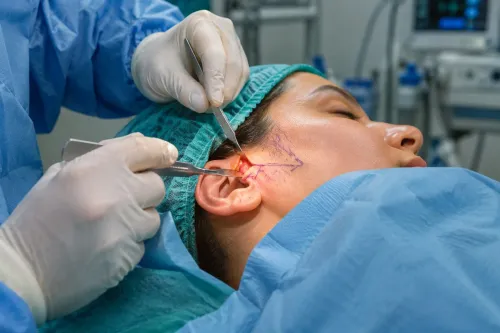
A permanent implant is a surgical commitment, not a one-time cure. The surgeon places and fixes a small weight inside the upper eyelid, often through an eyelid crease incision. Gold eye implant patients must plan for swelling, bruising, wound care, follow-up examinations, and continued lubricating drops or ointment if the eye surface remains dry.
| Option | Practical cost and recovery | Main trade-off |
|---|---|---|
| Gold eyelid weight | Eyelid surgery, healing time, and follow-up visits | Visibility, palpability, contour change, or incomplete closure |
| Temporary weight or tarsorrhaphy | Protection while nerve recovery is assessed | Temporary appearance change or restricted vision |
| Removal or revision | A second procedure, with additional healing and expense | Needed for migration, exposure, infection, poor closure, or an unsatisfactory result |
Ask which surgeon will examine the cornea and perform the operation, what protection you will use before surgery, and who will manage complications. Eye gold implant suitability also depends on whether the weight matches your eyelid strength and anatomy.
Possible problems include migration, extrusion, infection, inflammation, induced astigmatism, ptosis, eyelid contour abnormality, implant visibility, and persistent corneal exposure. A badly positioned or heavy implant can create pressure or an uneven lid. Revision or removal may correct the problem, but it cannot erase the extra operation.
Do not accept a permanent implant without a stated plan for failed closure, corneal damage, or removal. A specialist should also explain whether platinum, eyelid tightening, tarsorrhaphy, or nerve reanimation better fits your cause.
Frequently asked questions
Who is usually considered for an eye gold implant?
People with persistent lagophthalmos caused by facial-nerve palsy, stroke, trauma, tumour surgery, or another condition may be considered. A specialist must confirm that the eyelid weakness is lasting and threatens corneal protection.
Which examination findings decide eye gold implant suitability?
The clinician assesses how far the eyelid remains open, corneal exposure, tear-film and surface damage, upper-eyelid movement, brow position, levator function, and signs of facial-nerve recovery. These findings help determine whether a weight is appropriate and what weight is needed.
How does a gold weight compare with other eye-protection treatments?
Lubricating drops, ointment, moisture chambers, eyelid taping, botulinum toxin, temporary tarsorrhaphy, and nerve or eyelid surgery address different situations. A gold weight provides mechanical assistance during blinking but requires implantation and carries surgical risks.
What should you ask during an eye implant consultation in Mumbai?
Ask which diagnosis caused the incomplete closure, whether nerve recovery is expected, which implant material and weight are recommended, how placement will be tested, what alternatives fit your case, and who will manage corneal problems after surgery.
What practical costs and risks should you accept before choosing implantation?
Discuss consultation, tests, surgery, anaesthesia, medicines, follow-up, and revision costs separately. Risks include asymmetry, visibility or movement of the weight, infection, extrusion, eyelid contour changes, incomplete closure, and persistent corneal exposure.
Keywords