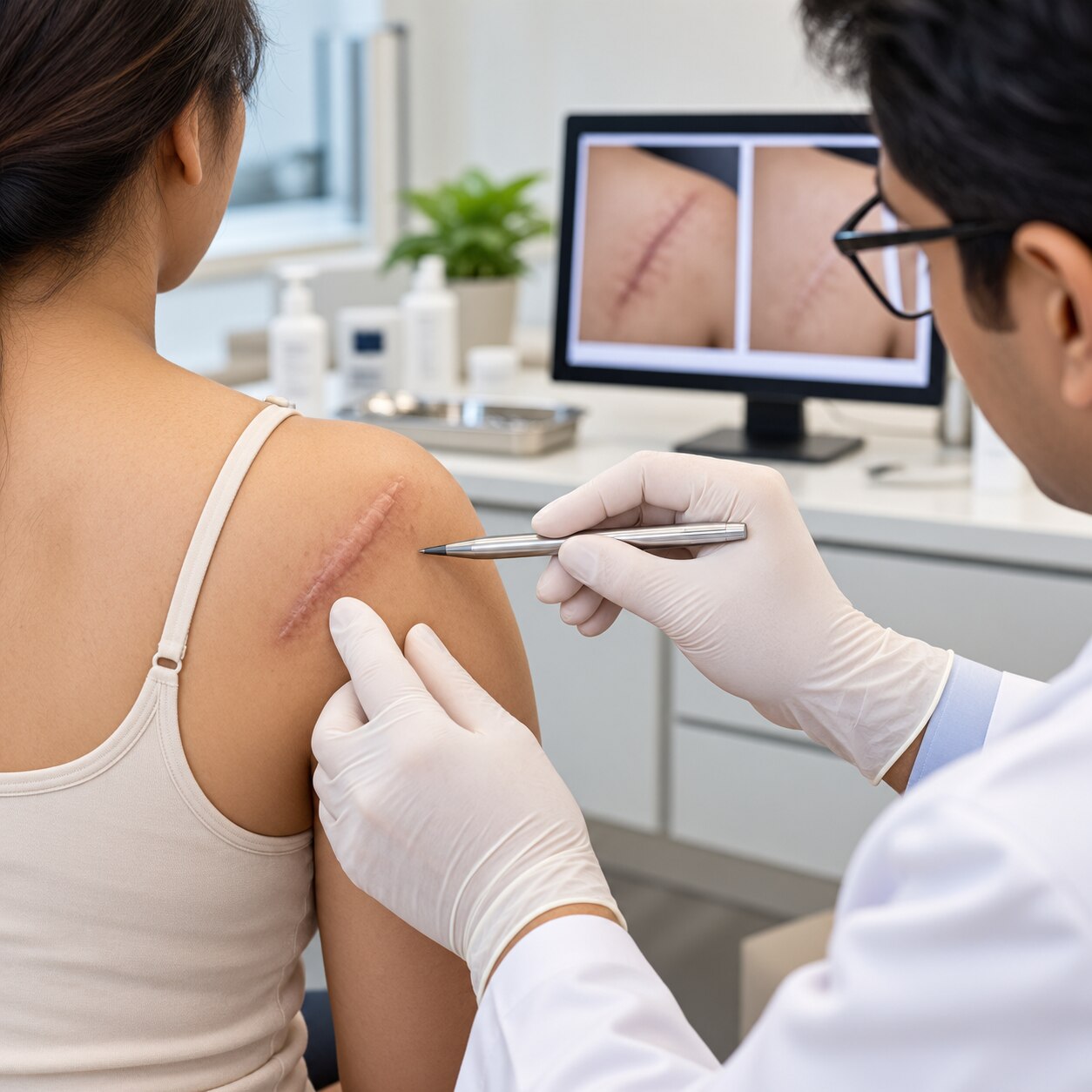
The right treatment depends on whether your scar is depressed, raised, tethered, widened, discoloured, or restricting movement, as well as its age, location and behaviour. By the end, you can narrow the options, recognise when waiting or combination treatment makes sense, and prepare better questions for a consultation.
Key takeaways
- Identify whether the scar is depressed, raised, spreading, or movement-restricting.
- Match treatment to scar behaviour instead of choosing a procedure by name.
- Compare sessions, recovery time, and risks for each facial location.
- Choose surgical revision only when the scar’s structure makes it appropriate.
Start by identifying what kind of scar you have
Start with the scar’s behaviour, not the procedure advertised. A depressed mark needs a different plan from a raised, spreading, or movement-restricting scar. If you are searching which scar revision treatment is right for me in mumbai, identify the category below before comparing clinics or session packages.
| Type | What you may notice | Key point to assess |
|---|---|---|
| Atrophic | Depressed acne, chickenpox, or trauma pits | Check whether the scar is tethered to deeper tissue |
| Hypertrophic | Raised, firm scar confined to the original wound | Thickness and symptoms matter more than colour alone |
| Keloid | Raised scar extending beyond the original injury | Recurrence risk changes the treatment plan |
| Contracture | Tight skin that pulls the eyelid, lip, nostril, or jawline | Function needs assessment; do not wait automatically |
| Widened or traumatic | A flat, stretched, irregular, or poorly aligned line | Direction, width, and tension determine whether revision helps |
| Pigment change | Brown, red, or darker skin with little texture change | Treat colour separately from a texture defect |
Ask whether the scar has matured, because its final width and thickness are easier to judge later. Earlier review matters when movement, an eyelid, lip, or nostril is distorted, or a scar is rapidly thickening.
Active acne, infection, wound breakdown, or ongoing inflammation should be addressed first; continuing acne can create new scars and obscure improvement. Also report a history of dark marks after inflammation, since sun exposure can deepen healing-related pigmentation.
Match the treatment to the scar, not the procedure name
A depressed scar needs volume or release; a raised scar needs flattening and control of excess collagen. Searching “facial scar revision options Mumbai” is useful only after matching the method to the scar’s depth, colour, age, skin type and location.
| Option | Best match | Main trade-off |
|---|---|---|
| Silicone gel or sheets, sunscreen and time | New, raised or darkening scars | Low risk and inexpensive, but improvement is slow and incomplete |
| Corticosteroid or 5-fluorouracil injections | Hypertrophic scars and keloids | Can flatten the scar, but pain, pigment change, thinning or recurrence are possible |
| Microneedling, fractional CO2 or erbium laser, dermabrasion | Textured, atrophic acne or chickenpox scars | Requires multiple sessions; redness, downtime and post-inflammatory pigmentation are concerns |
| Subcision, punch excision or elevation | Tethered depressions and sharply defined pits | Can improve contour, but bruising, new marks or uneven texture may follow |
| Surgical revision or combination treatment | Wide scars, severe contour defects or contractures | Changes scar direction or releases tight tissue, yet creates a new scar and cannot promise invisibility |
For pigmentation without a major texture defect, sun protection and pigment-directed treatment may fit better than resurfacing. Use broad-spectrum sunscreen, protective clothing and no tanning while the area heals.
Control active acne before treating acne scars; ongoing breakouts create new scars and obscure the result. A scar crossing an eyelid, lip or nostril deserves prompt assessment if it restricts movement or distorts the opening. A rapidly thickening scar also needs review rather than routine cosmetic treatment.
Compare sessions, downtime and facial-location risks
Non-surgical revision usually means a planned course, not one visit. Your clinician should define the endpoint—flatter height, smoother texture, less colour contrast, or improved movement—then set review dates and photograph progress under consistent lighting.
| Option | Sessions and downtime | Main risks or limits |
|---|---|---|
| Microneedling | A course; redness for about 1–3 days | Suits selected shallow depressed scars; avoid active acne, infection, or uncontrolled inflammation |
| Non-ablative fractional laser | Several sessions; redness and swelling for several days | Improves texture without removing the scar; pigment change remains possible |
| Ablative fractional laser | Several sessions; longer peeling, redness, and social downtime | Greater risk of prolonged redness and pigmentary change |
| TCA CROSS | Repeat spot treatments; crusting and redness for several days | Mainly for ice-pick scars, not broad or raised scars; technique affects pigment risk |
| Steroid or 5-fluorouracil injections | Repeat visits; tenderness or swelling after treatment | Useful for raised scars; thinning, colour change, or recurrence requires monitoring |
Location changes the plan. An eyelid scar needs special caution because swelling or contracture can affect eye closure; a lip scar can distort speech, eating, or the lip border. Near the nose or nostril, treatment must protect breathing and contour.
Cheek treatment focuses on texture and pigment, while the forehead and hairline require sun protection and care around hair-bearing skin. A jawline scar faces movement and tension, so healing and recurrence deserve closer follow-up.
If a scar crosses an opening or restricts movement, seek assessment for function before choosing cosmetic resurfacing.
Know when surgical revision helps and when it is the wrong choice
Surgery is preferable when a facial scar is wide, irregular, tethered, or pulling an eyelid, lip, nostril, or jawline out of position. It is also useful when the main problem is scar direction or contour rather than surface texture. A scar revision specialist in Borivali should assess whether function, not appearance alone, justifies earlier treatment.
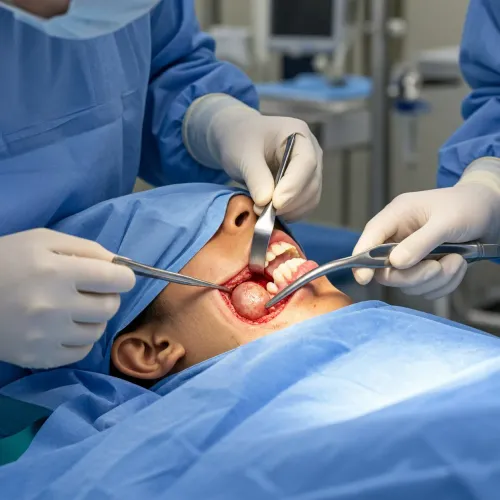
Surgical revision usually involves numbing the area, removing or releasing selected scar tissue, changing the scar’s direction, and closing the wound in layers. Contractures may need release with a flap or graft. The result is a new surgical scar, with risks including infection, widened healing, pigment change, recurrence, and an outcome that remains visible.
Surgery is the wrong first choice when:
- The scar is still changing after a recent injury, wound breakdown, or ongoing inflammation.
- Active acne is creating new scars; control it before definitive revision.
- The area has an untreated infection.
- A painful, itchy, rapidly enlarging, bleeding, ulcerated, or beyond-the-original-wound scar needs medical assessment first.
- The scar is a keloid; cutting it out alone carries a substantial recurrence concern and needs a recurrence-prevention plan.
- The defect is mainly pigmentation or shallow texture, where resurfacing or medical treatment may avoid an incision.
At Dr. Karan Mehta's Mouth Jaw Face & Hair Transplant, ask which endpoint surgery targets, how the closure will follow facial tension lines, and what follow-up treats recurrence or poor healing. Do not choose a clinic from location alone; verify medical registration and experience with your scar type.
Related service
Face Surgical scar revision is done at our clinic to give an esthetic scar so that it is not visible easily and from a distance. View service → |
Use the consultation to choose a safe, measurable plan
Ask the clinician to name your scar type, explain why the proposed method fits it, and define what improvement is realistic. A search for the best scar treatment for face Mumbai should end with a diagnosis and documented plan, not a procedure name.
- Is active acne, infection, wound breakdown or inflammation present? Treat these first; new acne can create scars and hide whether treatment worked.
- Is the scar mature, or is it still changing? Ask why waiting is safe, or why earlier treatment is needed for eyelid or lip distortion, restricted movement or rapid thickening.
- What endpoint will we measure: less depth, narrower width, softer height, reduced colour, or easier movement?
- How many sessions, what interval, what downtime, and what total cost should I expect?
- What is my risk of prolonged redness, darker or lighter pigmentation, infection, recurrence or worsening, especially with my skin tone?
- What credentials, medical registration and experience do you have with this exact scar type?
| Finding | Ask about | Measurable follow-up |
|---|---|---|
| Depressed or tethered | Microneedling, laser, subcision or combination treatment | Standardised photographs and depth or texture change |
| Raised or extending beyond the wound | Steroid or 5-fluorouracil injections, silicone and recurrence prevention | Height, symptoms and regrowth |
| Contracture or facial distortion | Whether surgery should be earlier than routine scar maturation | Movement, eyelid closure or lip position |
Confirm who will perform each step and when review occurs. Delay treatment if the plan has no endpoint or follow-up.
Frequently asked questions
How do I identify what kind of facial scar I have?
Assess whether the scar is depressed, raised, spreading, or restricting facial movement before comparing treatments.
How should I compare facial scar revision options in Mumbai?
Compare the treatment’s fit for your scar, expected sessions, downtime, and risks at its facial location.
When does surgical scar revision help?
Surgical revision helps when the scar’s structure requires removal or repair that non-surgical treatment cannot address.
What should I ask during a scar revision consultation?
Ask how the scar was classified, which outcome will be measured, how many sessions are planned, and what recovery involves.
Keywords