A low FUE quote is difficult to compare until you know whether it covers follicular-unit grafts, surgeon-led work, anaesthesia, medicines, follow-up and taxes. By the end, you will be able to estimate the scale of treatment, compare FUE with FUT, judge whether surgery is suitable and request a written quote from a Borivali clinic without mistaking an indicative range for a diagnosis.
Key takeaways
- FUE removes individual grafts; FUT removes a strip of donor scalp.
- Graft needs depend on hair loss pattern, donor density, and restoration goals.
- Demand a written quote covering graft count, surgeon role, medicines, and follow-ups.
- Compare who extracts grafts, creates recipient sites, and implants them.
FUE or FUT: which transplant method fits your donor area and hairstyle?
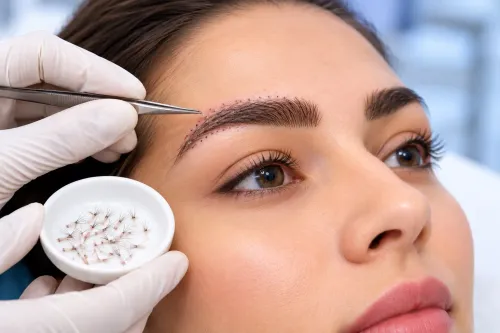
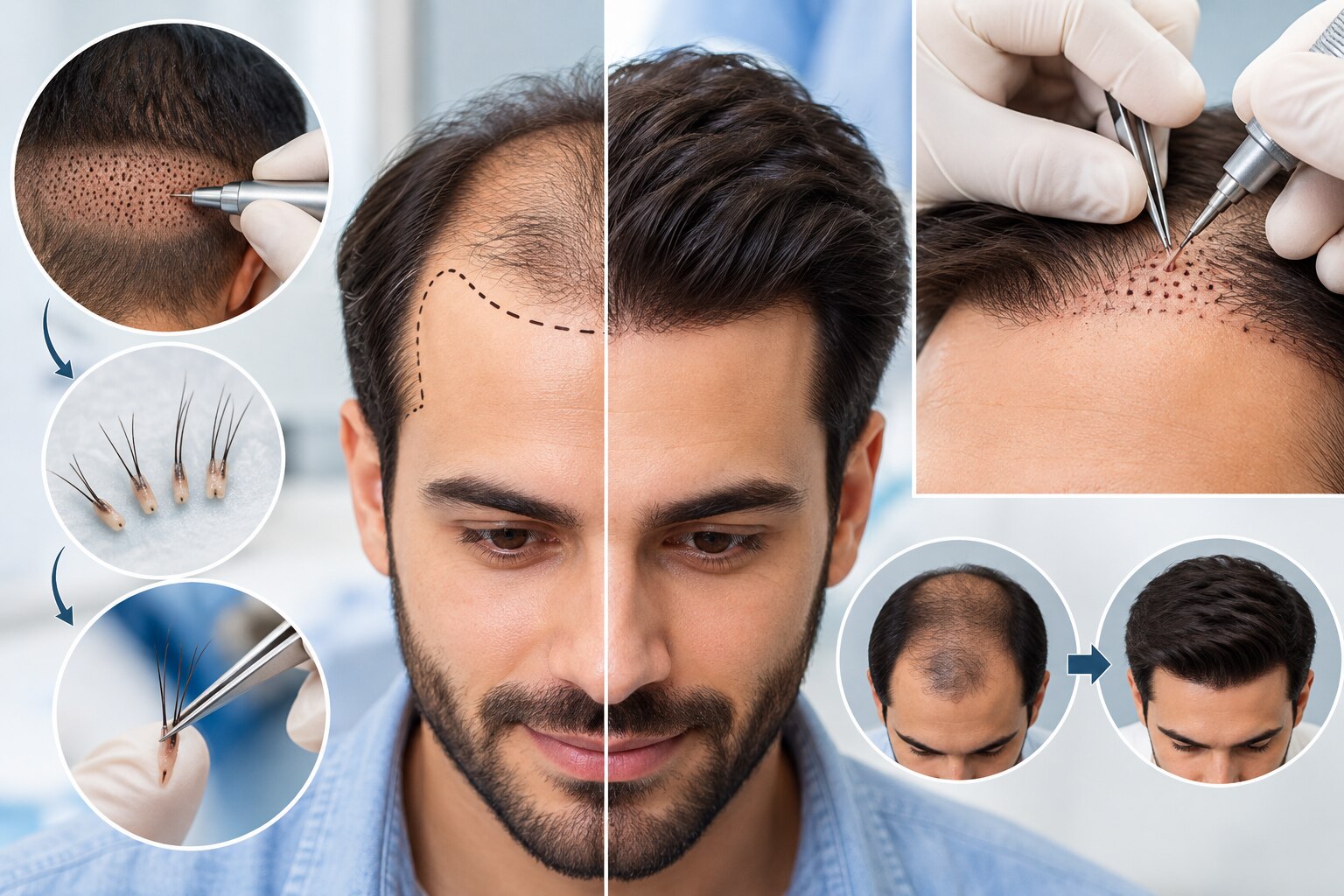
FUE is an extraction technique, not a complete transplant method. In follicular-unit extraction, a small punch removes individual follicular units from the donor area; the surgeon then places those grafts into recipient sites. Ask separately who extracts, creates recipient sites and implants, and how many grafts are planned.
| FUE versus FUT | FUE | FUT |
|---|---|---|
| Scarring and donor depletion | Leaves small dot scars, not a scarless result. Aggressive extraction can cause donor thinning or a moth-eaten appearance, especially with short hair. | Removes a strip and leaves a linear scar; excessive harvesting can still thin the donor area. |
| Graft survival | Survival depends on punch accuracy, handling, storage and implantation. Skilled FUE can perform well, but it is not automatically superior. | Strip harvesting can provide consistent grafts with less individual extraction trauma; survival still depends on handling and placement. |
| Recovery and shaving | Often requires shaving part or all of the donor area; soreness and scabbing usually affect the first several days. | May avoid complete shaving, but the incision needs wound healing and staple or suture care. |
| Session size | Large sessions can spread depletion across the donor area and take longer. | May suit someone needing many grafts from a limited donor area, provided scalp laxity and scar risk are acceptable. |
Neither method fits weak donor density, unrealistic density expectations, active scalp disease or insufficient long-term donor reserve. A surgeon should examine future hair loss before using grafts aggressively; a short hairstyle makes every extraction error easier to see. “Scarless” is a warning sign, not a treatment description.
How many grafts do you need, and are you a suitable candidate?
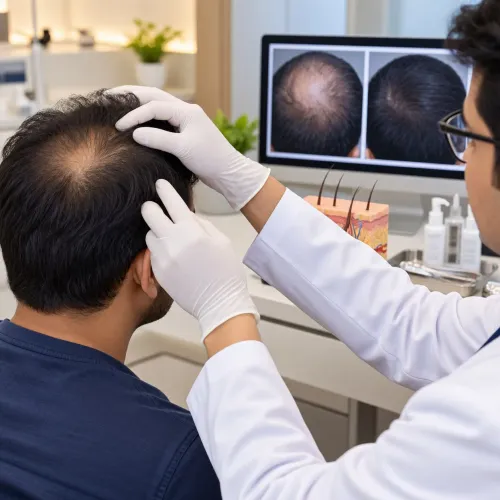
A graft estimate depends on the pattern, not an online calculator. Receding hairline grafts usually prioritise a conservative, age-appropriate front; crown loss needs rotational coverage and may consume more grafts; diffuse thinning requires confirmation that enough donor hair remains before assessing diffuse thinning eligibility.
| Area | Planning focus | Main risk |
|---|---|---|
| Receding hairline | Rebuild the frontal frame while preserving grafts for future recession | A very low hairline exhausts finite donor supply |
| Crown loss | Cover the whorl with grafts distributed for visual coverage | The crown can absorb grafts needed for the mid-scalp |
| Diffuse thinning | Examine whether native hair is miniaturising and whether donor density is adequate | Transplanting unstable, widespread loss can produce uneven results |
A graft is not one hair. One follicular unit commonly contains one to four hairs, so a quote based on hair count cannot be compared directly with a follicular-unit graft quote. Donor density, hair calibre, curl, scalp laxity and age affect coverage, while unstable loss demands a reserve for later recession.
- Confirm the diagnosis before elective surgery. Androgenetic alopecia must be separated from telogen effluvium, nutritional deficiency, thyroid disease, alopecia areata, traction alopecia, scarring alopecia and inflammatory scalp conditions.
- Investigate patchy loss, scaling, redness or scarring first; active inflammation or scarring can compromise graft survival.
- Ask for donor-area examination, hair-loss stability, a proposed hairline, expected density and a revision plan. Online calculators cannot diagnose hair loss or measure donor supply.
What should an FUE quote in Borivali or Mumbai actually include?
A realistic FUE cost Borivali estimate is about ₹30–₹150 per graft. Small sessions are often quoted at ₹60,000–₹1.5 lakh, while larger sessions can reach ₹1.5–₹3 lakh or more. These are market estimates, not a regulated tariff or a personalised quotation. The final hair transplant cost Mumbai depends on graft requirements, technique and the clinic’s staffing.
| Quote model | How it works | What to check |
|---|---|---|
| Per-graft pricing | You pay a stated price per follicular-unit graft | Confirm the planned graft count and whether “graft” means a unit or individual hair |
| Package pricing | One total covers a defined procedure and selected services | Demand an itemised list; “package” must not hide exclusions |
A follicular-unit graft commonly contains one to four hairs, so a quote based on hairs is not comparable with a price per graft. A low headline price can exclude hairline design, recipient-site incisions, extraction, implantation, surgeon participation or operating-room charges, then bill each separately.
Before paying a deposit, require these inclusions in writing:
- Planned graft count and the counting method
- Surgeon fees, named surgeon and actual operative involvement
- Operating-room charges, local anaesthesia and medicines
- Taxes, dressings and scheduled follow-up visits
- PRP, if offered, and every other add-on charge
- Revision policy, including what happens after poor growth or an incomplete result
Obtain the signed quote and revision policy before booking. A cheap total is not a saving if critical surgical steps are missing.
How do you compare FUE clinics and the surgeon’s actual role?
Compare clinics by named surgical responsibilities, not by a specialty label or polished website. A specialty label alone does not establish hair-restoration competence; check the practitioner’s current medical registration, specific hair-restoration training, operative experience and complication-management plan.
A practical FUE clinic checklist should include:
- Ask who performs hairline design, recipient-site incisions, graft extraction and graft implantation.
- Request each person’s name, role and medical qualification, then confirm those details in the consent documents.
- Reject a technician-led transplant if technicians perform critical surgical stages without appropriate medical supervision and clearly identified responsibility.
- Ask to see consistently lit before-and-after cases performed by the named surgeon, not anonymous clinic results.
| Stage | What to confirm | Warning sign |
|---|---|---|
| Hairline design | Surgeon approves the shape and future-loss plan | Very low adolescent hairline |
| Recipient sites | Named medically qualified practitioner makes incisions | Staff cannot identify the operator |
| Extraction and implantation | The clinic states who handles grafts and how | “Unlimited grafts” without donor assessment |
| Complications | Written plan for bleeding, infection, poor growth and revision | No emergency contact or revision policy |
A credible consultation records the diagnosis, donor examination, hairline design, graft estimate, expected density, anaesthesia, aftercare and revision policy. It should also explain alternatives and preserve donor supply for future loss.
You can consider Dr. Karan Mehta's Mouth Jaw Face & Hair Transplant alongside other Borivali providers only after checking these details against the consultation, consent documents and current registration information. A low price cannot compensate for unclear surgical responsibility.
Related service
Hair Hair loss is a normal physiologic process. The normal count for hair loss is somewhere between 50-100 hairs daily, females lose more than males. View service → |
What treatment, recovery timeline and risks should you discuss before booking?
1. Transplantation does not stop androgenetic alopecia in untreated native hair, so discuss a long-term maintenance plan before booking. Minoxidil can cause scalp irritation, unwanted facial hair or initial shedding; finasteride hair transplant plans require discussion of sexual or mood-related adverse effects; dutasteride has similar concerns and remains in the body longer.
Do not use finasteride or dutasteride during pregnancy, and discuss pregnancy planning before treatment. Discuss minoxidil after FUE with your clinician, especially during pregnancy or breastfeeding. PRP hair treatment and other medical treatments need a clear diagnosis-based reason, not automatic package inclusion.
2. The FUE recovery timeline is measured in months, not weeks. Early shedding can occur, new growth becomes noticeable after several months, and final assessment commonly takes place at 9–12 months or later. A clinic promising a finished result within weeks is setting an unrealistic expectation.
3. Ask how the plan addresses folliculitis, infection, bleeding, swelling, altered sensation, poor growth, shock loss, an unnatural hairline and donor overharvesting. Seek prompt clinical review for sudden severe pain, fever, pus, spreading redness or rapidly worsening swelling.
Warning signs include guaranteed density, unlimited grafts, a very low adolescent hairline and no donor-area examination. These promises can consume finite donor reserves and leave you with an unnatural result or inadequate grafts for future recession.
Frequently asked questions
What is the difference between FUE and FUT hair transplantation?
FUE removes individual follicular units with a punch, while FUT removes a strip of donor scalp before graft preparation. Your donor area, hair loss pattern, and preferred hairstyle influence the choice.
How many grafts do you need for an FUE hair transplant?
The required graft count depends on your baldness pattern, donor density, hair calibre, hairline design, and restoration goals. A scalp examination is needed for a reliable estimate.
What should an FUE quote in Borivali or Mumbai include?
Ask for the planned graft count, procedure stages, surgeon’s role, clinic and facility charges, medicines, follow-up visits, and any charges for revisions or additional treatment.
How can you compare FUE hair transplant clinics?
Ask which doctor performs extraction, recipient-site creation, and implantation; then compare the proposed graft plan, donor-area assessment, written quote, recovery guidance, and risk discussion.
What recovery and risks should you discuss before booking?
Discuss washing instructions, work and exercise restrictions, swelling, scabbing, temporary shedding, infection, poor growth, scarring, and the clinic’s follow-up plan.