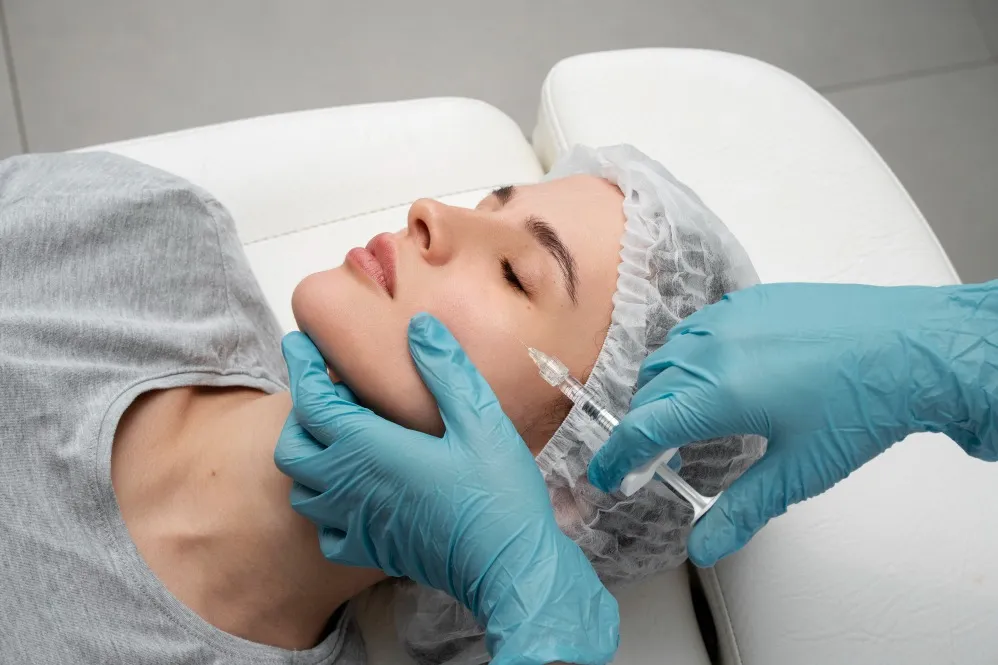
Dermal fillers are injectable materials used to restore volume, support facial contours or soften selected folds. They can create noticeable changes without facial surgery, but they are not suitable for every wrinkle, shape concern or degree of skin laxity.
At Mouth Jaw Face Clinic (MJF Clinic), filler treatments are planned by Dr. Karan Mehta, an Oral and Maxillofacial Surgeon with a Fellowship in Aesthetic Medicine from ILLAMED, affiliated with Greifswald University, Germany. His training and detailed knowledge of facial anatomy help him evaluate how filler placement may affect facial proportions, soft tissues and surrounding structures.
Concerns That Dermal Fillers May Address
Depending on the patient’s anatomy and the product selected, fillers may be considered for:
- Reduced cheek volume
- Selected facial folds
- Lip definition or volume
- Chin contouring
- Jawline enhancement
- Certain facial asymmetries
- Depressed scars in suitable cases
- Age-related changes in facial support
Fillers cannot stop facial muscles from producing expression lines. They also cannot create the same lifting or tissue-removal effect as surgery in patients with considerable skin laxity.
Choosing Dermal Fillers in Borivali West
A filler consultation should assess the entire face instead of examining one line in isolation. Facial proportions, bone structure, soft-tissue distribution, skin quality and natural movement all influence the treatment plan.
Before proceeding, patients should understand:
- The type of filler being proposed
- The area and tissue depth being treated
- Why a particular quantity is recommended
- The expected degree of correction
- How long the result may remain
- Common temporary reactions
- Rare but significant complications
- What to do if warning symptoms develop
The goal should be proportionate correction rather than injecting the largest available volume. In some cases, treatment may be completed in stages so the initial result can be reviewed before more product is considered.
Temporary Reactions and Warning Signs
Swelling, tenderness, redness and bruising can occur following filler injections. Certain areas, particularly the lips, may swell more noticeably during the initial period. Minor asymmetry may also be visible temporarily while the swelling settles.
Less common complications can include infection, persistent lumps, delayed inflammatory reactions and tissue injury. Accidental injection into a blood vessel is a rare but serious risk that can interrupt the blood supply to the skin or nearby structures.
Severe or increasing pain, unusual whitening or darkening of the skin, visual disturbance, weakness or sudden neurological symptoms require immediate medical attention.
Fillers, Botox or Skin Treatments?
Choosing the right procedure depends on the reason behind the concern:
- Dermal fillers restore or add volume.
- Botox reduces selected muscle activity.
- Skin treatments focus on texture, pigmentation or superficial lines.
- Surgery may be more appropriate for substantial laxity or structural change.
Some people benefit from one carefully selected treatment, while others may require a staged combination. Receiving multiple procedures does not automatically produce a more natural result.
What to Discuss Before Treatment
Patients should share details of previous fillers, facial surgery, allergies, dental procedures, skin infections and current medicines. They should also ask which product will be used and whether follow-up is included.
Interested in dermal fillers for facial volume or contouring? Consult Dr. Karan Mehta at MJF Clinic for a detailed facial assessment and a treatment plan designed around your anatomy and aesthetic goals.
Keywords